Group Exhibition
All That Is Solid Melts Into Water
Kunsthall Oslo, Norway
29.04.2023 — 11.06.2023
—
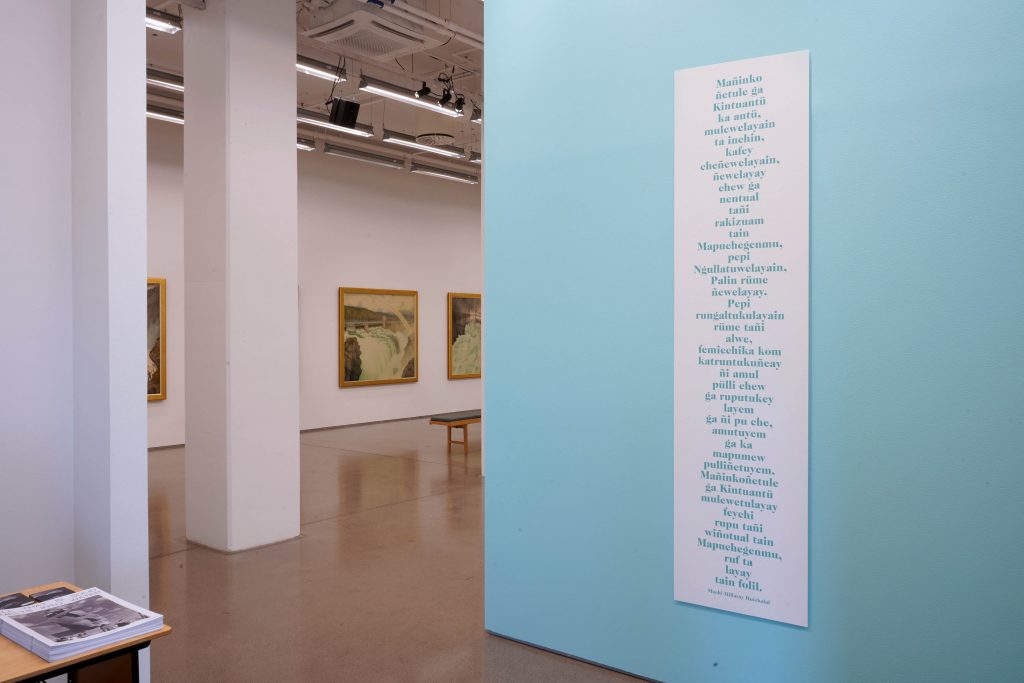
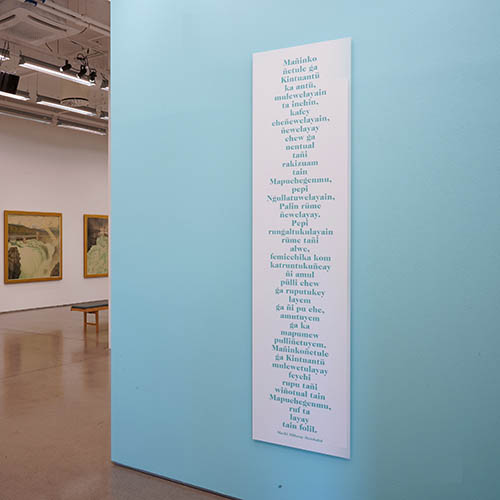
Installation view All That Is Solid Melts Into Water
All That Is Solid Melts Into Water tells a story about the development of hydroelectric power and encounters between modernity and traditional communities over the twentieth and twenty-first centuries. The exhibition brings together historical artworks, archeological artifacts and new commissions from contemporary artists – from Norway to Latin America, Sápmi to Nubia.
In this newly commissioned work Kintuantü, Ignacio Acosta brings a message from Machi Millaray Huichalaf, a spiritual community leader tasked with defending the Pilmaiquén River from the construction of dams that would flood sacred places for the Mapuche-Williche. In the message, the Machi emphasizes that Statkraft’s continued exploitation of the Pilmaiquén River will lead to the destruction of the Kintuante, and the Mapuche way of life. This work is drawn during Acosta’s stay in Sámi House in Kiruna, Sweden, an act which brings about a conversation between two disparate geographies – Atacama Desert in Chile and Kiruna – and the struggles shared by marginalized, indigenous communities fighting for self-determination within them.
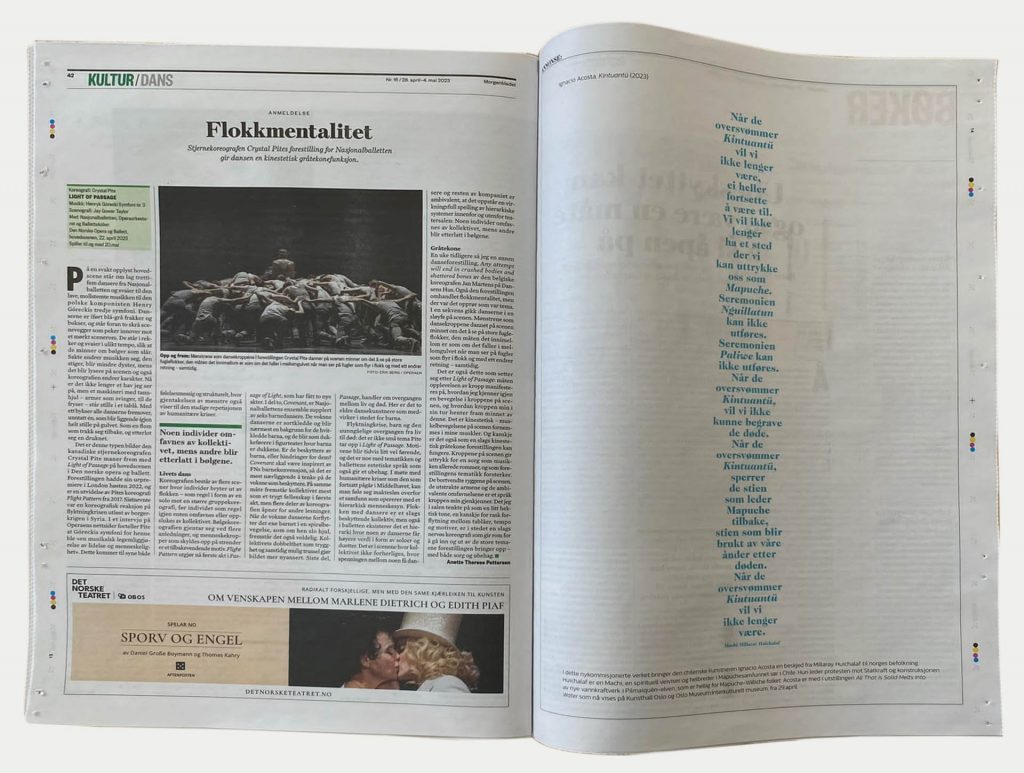
Newspaper insert, Monrgenbladet, Oslo, 28 April, 2023
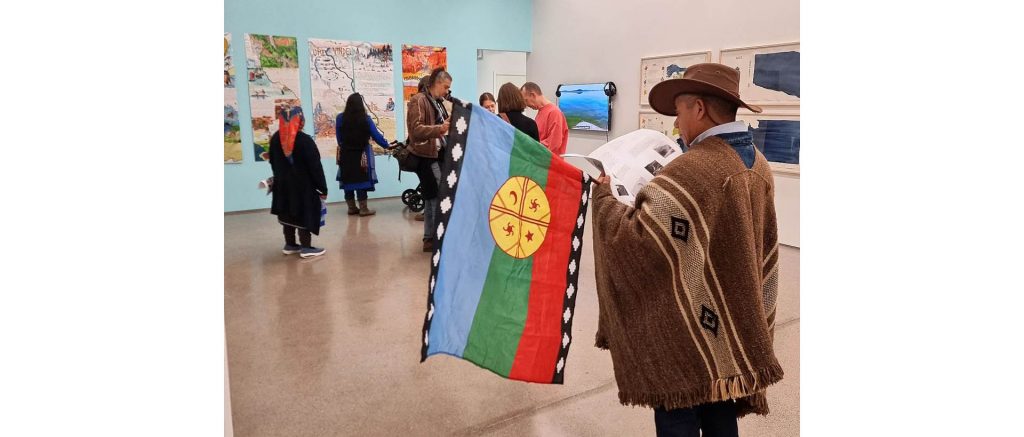
Mapuche representatives visiting the exhibiton
—
When they flood the Kintuantü, we will no longer be, nor will we be able to go on being.
We will no longer have a place to express ourselves as Mapuche.
The ceremonies Nguillatun or Paliwe will no longer be performed.
When they flood the Kintuantü, we will not be able to bury our dead.
When they flood the Kintuantü, they will block the path by which the Mapuche return, which is the path used by our spirits after death.
When they flood the Kintuantü, we will no longer be.
Millaray Huichalaf is a Machi, spiritual guide and healer of her Mapuche Indigenous community in the south of Chile. She leads the resistance against Statkraft, a Norwegian state company building Los Lagos hydroelectric plant, that would destroy the delicate ecosystem of Pilmaiken, a river that is sacred to her culture.
—
Credits translation
Mapudungún by Amanda Huichalaf Pradines and Alberto Curamil
Norwegian by Ingrid Fabiola O. Moen
—
—