Habitate Über_Lebensräume, Triennale Kleinplastik Fellbach, Germany

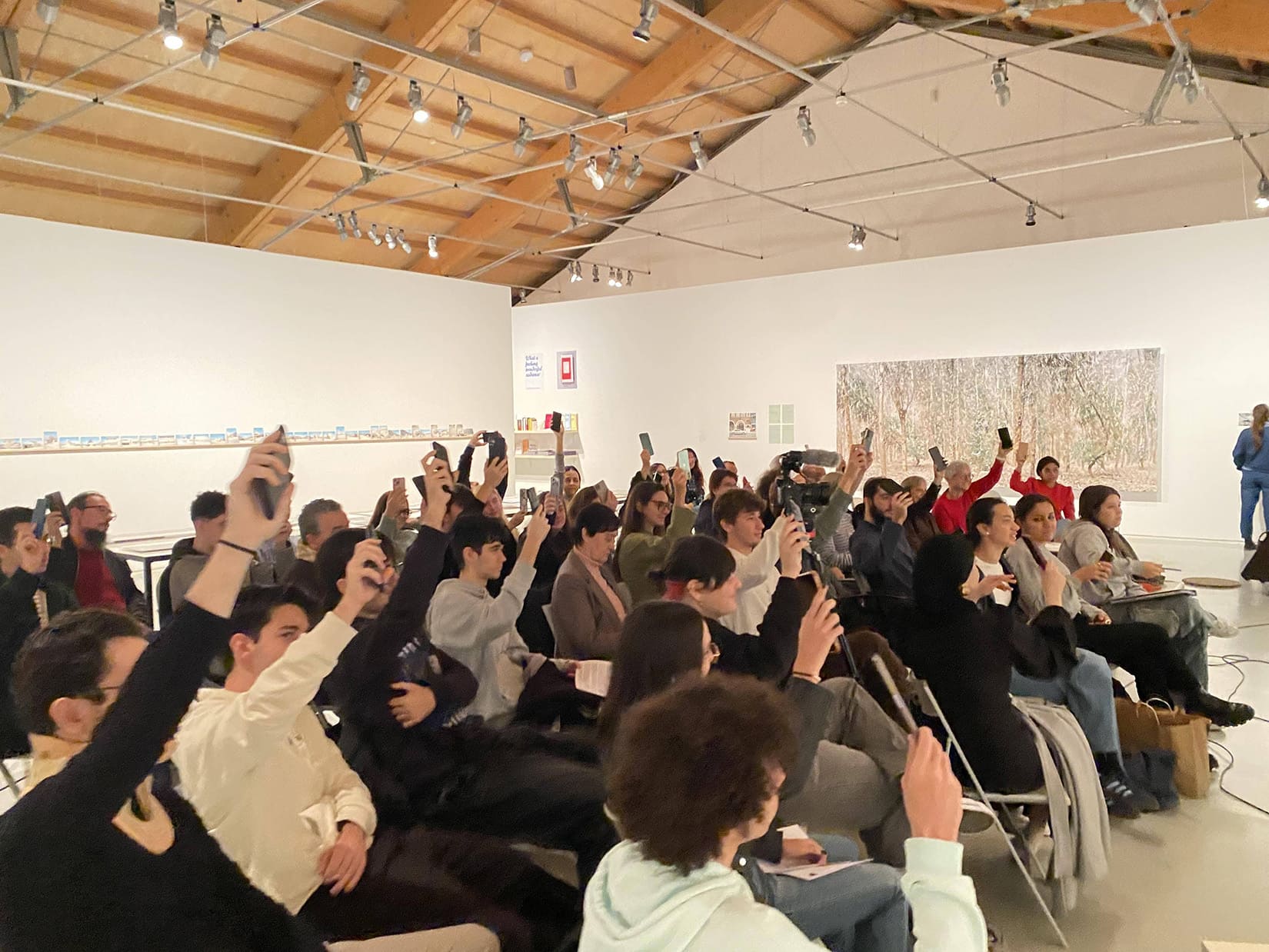
Installation view From Mars to Venus 13 Biennal de Arte Leandro Cristòfol – Prologue Curated by María Íñigo Clavo and Christian Alonso
Curated by Claudia Emmert and Inna Neddermeyer.
How and in which spaces can we live together in the face of a profoundly changing planet? How can a cross-species community succeed? The 16th Fellbach Small Sculpture Triennial will focus on the theme of "habitats" with sculptural objects by around 60 contemporary artists. This is where all the defining issues of our time culminate: climate change, pandemics, wars, migration, etc. Habitats of living beings within a biotope are finite, vulnerable and cannot be restored at will. The 16th Small Sculpture Triennial therefore asks the question: How do we want to deal with the earth and its habitats? And: Where do we want to be? The exhibition shows how contemporary artists locate the topic between utopia and dystopia. The sculptures show habitats cultivated by humans, to which animals, fungi and plants have adapted, and are reminiscent of lost habitats that had to give way to the demands of a society geared towards growth. They refer to habitats that are still shaped by the destruction of colonialism and allow the viewer to wander into alternative futures: into hybrid, digital, decolonial, symbiotic or extraterrestrial habitats, which are sometimes ironically exaggerated and inspired by science fiction and gaming figurations. Terms such as cohabitation and equality, empathy and care also make clear the struggle for new collective narratives that could describe a possible change. The exhibition therefore also negotiates approaches to a new understanding of nature, not in the sense of a naturalization of humans or an anthropomorphization of nature - but in the sense of an equal survival community. During the exhibition, the Alte Kelter in Fellbach itself becomes a habitat. The exhibition can be experienced as a sensual-aesthetic landscape.
The artistic positions are embedded in it and at the same time spaces are created for lingering and exchanging ideas. The spectrum of the works of art ranges from traditional small sculptures to aluminum and tin casts, 3D scans, architectural models, hybrid objects made of natural and artificial materials and design objects such as shoes made of organic materials. In addition, the artists make invisible phenomena such as fine dust pollution in the air or the impact of radioactive particles on the earth visible. Experimental artistic test arrangements take a speculative look at possible futures.
-
External Link