Monographs

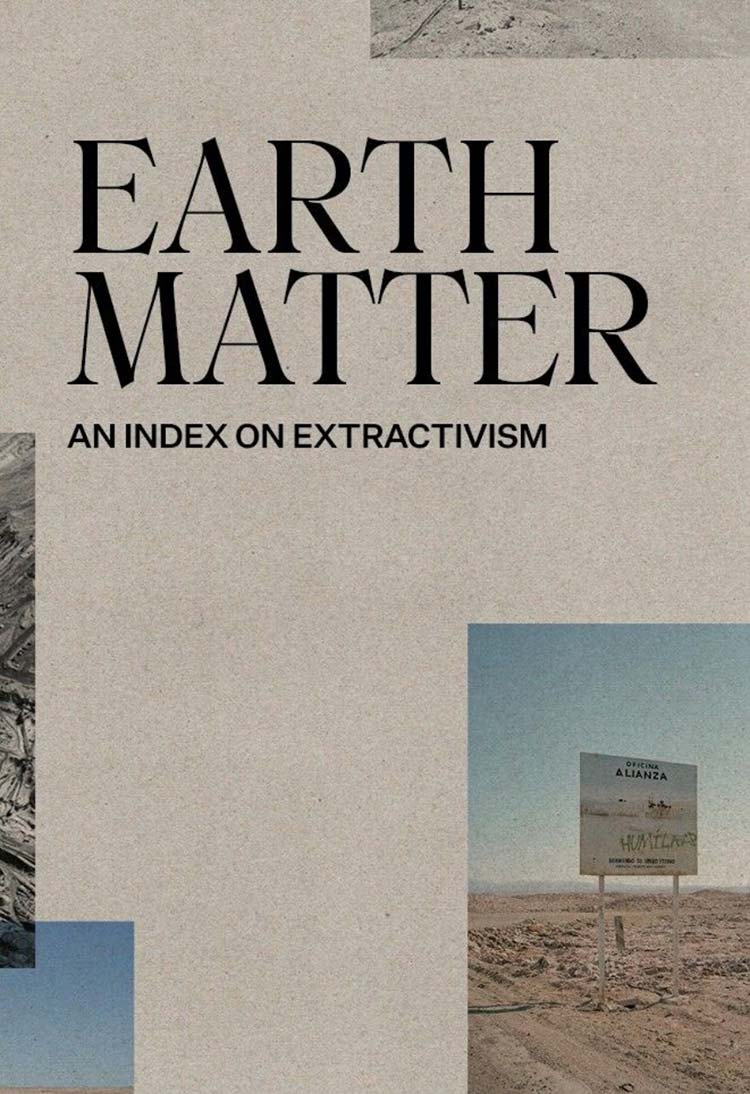
Earth Matter: An Index on Extractivism

Xavier Ribas, Louise Purbrick, and Ignacio Acosta
Edited by Carles Guerra and Joana Teixidor
With Essays by Robert Nichols, Cristina Dorador, and Sara Larraín
The culmination of over a decade of collaborative research exploring the global impact of extractivism, tied to the Traces of Nitrate project.
Earth Matter delves into the history of extractivism in Chile, beginning with the nitrate mines in the Atacama Desert in the nineteenth century and extending to the ongoing extraction of copper, lithium, and water. Through photography, video, archival research, and personal interviews, artist-researchers Xavier Ribas, Ignacio Acosta, and activist-writer Louise Purbrick examine the interconnected forces that bind Chile’s natural resources to global capital, particularly in the financial district of London.
This publication offers a critical analysis of how extractivist practices have shaped both historical and contemporary life, while anticipating future forms of exploitation. An index of terms explores past and present facts, documents, sites, projects, politicians, activists, NGOs, and critical writings, forming a Benjaminian constellation that readers can connect and decipher at their own pace.
The book includes essays by scientist Cristina Dorador on life in extreme climates, politician and environmentalist Sara Larraín on the legal protection of glaciers, political theory professor Robert Nichols on the history of land expropriation related to extractivism, and art curator Carles Guerra. Earth Matter provides a comprehensive map of the forces driving the increasingly hegemonic system of resource extraction. It reflects not only on past struggles but also on the ongoing fight for justice in the face of an unrelenting global economy.
Traces of Nitrate is an arts research collective led by Ignacio Acosta, Louise Purbrick, and Xavier Ribas, committed to documenting the extraction of minerals from Chile and their transformation in global capitalist systems. Through writing, photography, video, and sound, they seek to reveal the ecological and colonial legacies of mining and advocate for environmental justice.
—
External Link
Archaeology of Sacrifice, modo Verlag and ZF Art Foundation Friedrichshafen

Publication that stems from scolarshiop from ZF Friedrichshafen AG.
Through the discovery of a Celtic sacrificial site at Mormont Hill – a limestone and marl quarry located in the Swiss canton of Vaud – the two-channel video installation with surround sound design Archaeology of Sacrifice unveils how the notion of sacrifice has transitioned from ancient sacred rituals to its contemporary meaning within extractive capitalism.
In 2006, the quarry was ordered to undertake an archaeological survey. In doing so, previous Celtic occupation was discovered. Evidence suggests the Celts living there during the second century BCE were experiencing a moment of crisis, perhaps linked to a Germanic invasion. Thus, they buried offerings in the form of several human and animal bodies, tools, and bronze vessels in exchange for guidance through the catastrophe.
Today, sacrifice is mediated by market exchange – the well-being of humans, non-humans, and the environment have been betrayed in favour of economic growth. Sacrifice zones are proliferating in areas deemed most extractable, most exploitable – usually regions under pressure from neoliberal policies. Here, humanity and nature are believed to be expendable and replaceable.
–
External Link

Copper Geographies, Barcelona/Mexico: Editorial RM

The publication Copper Geographies by Editorial RM (2018) invites the viewer on the journey of copper from raw material through stock market exchange value, smelted commodity, capital wealth and recycled material. From the transformed landscapes of the Atacama Desert through a re-imagined voyage to Wales and the City of London, the book documents spaces of circulation, environmental disruption, protest and trade, and makes visible the return of the copper hidden within technological devices to its geographical origins.
The publication presents documentary research in the form of maps, photographs and texts, and offers a critical spatial imaginary for re-thinking the geographies of copper. It includes six written contributions by curators, historians and poets: Andrés Anwandter, Marta Dahó, Tehmina Goskar, Tony Lopez, Louise Purbrick and Frank Vicencio López.
Copper Geographies stems from the practice-based PhD thesis The Copper Geographies of Chile and Britain: A photographic study of mining, carried out between 2012-2016 as part of Traces of Nitrate, a research project developed in collaboration with Art and Design historian Louise Purbrick and photographer Xavier Ribas, based at the University of Brighton and funded by the Arts and Humanities Research Council (AHRC).
–
External Link

PhD

Ignacio Acosta completed a practice-based PhD titled The Copper Geographies of Chile and Britain: A Photographic Study of Mining. Acosta’s photographic investigation is a study of the uneven geographical development of Chilean copper mining industry and the circulation of copper in Britain.
The research examines three key historical moments in a pattern of ‘de-nationalisation’, a term identified by Sassen (2003), of the copper resources of Chile: (1) 1840–1880; (2) 1904–1969; and (3) 1981–today, in which resources have been transferred from public to private management.
In this research, Acosta uses a combination of photographic and historical methodologies to explore the impact of those processes on the extractive ecologies of Chile and to connect them to the global geographies of London, Liverpool and Swansea. This thesis considers how photography can be used to propose a re-mapping of the relationship between the global and the local, the national and the transnational, making visible the hidden geopolitical forces that shape the mobile and unequal geographies of copper.
This doctoral investigation explores the global circulation of copper and its agency to produce geographical and political change. With the aim of revealing their close connections and networks, it examines the notion of ‘unequal geography’ established by Baran (1957) and the newer ‘mobility paradigm’ proposed by Sheller and Urry (2006). Acosta follows the flow of copper, in Held’s words, ‘across space and time’ (1999), creating a constellation of photographs and texts about the transformation and mutation of copper as it traverses the world, exploring traces of extraction, smelting, manufacture, transport and trade processes across geographies. In doing so, he opens ways of thinking about how landscape carries traces of those processes, bringing to the fore the significance of photographic intervention in highlighting them.
–
External Link

Writing contributions

Ignacio Acosta and May-Britt Öhman writing contribution to peer-reviwed article edited by Chiara Sgarmella.
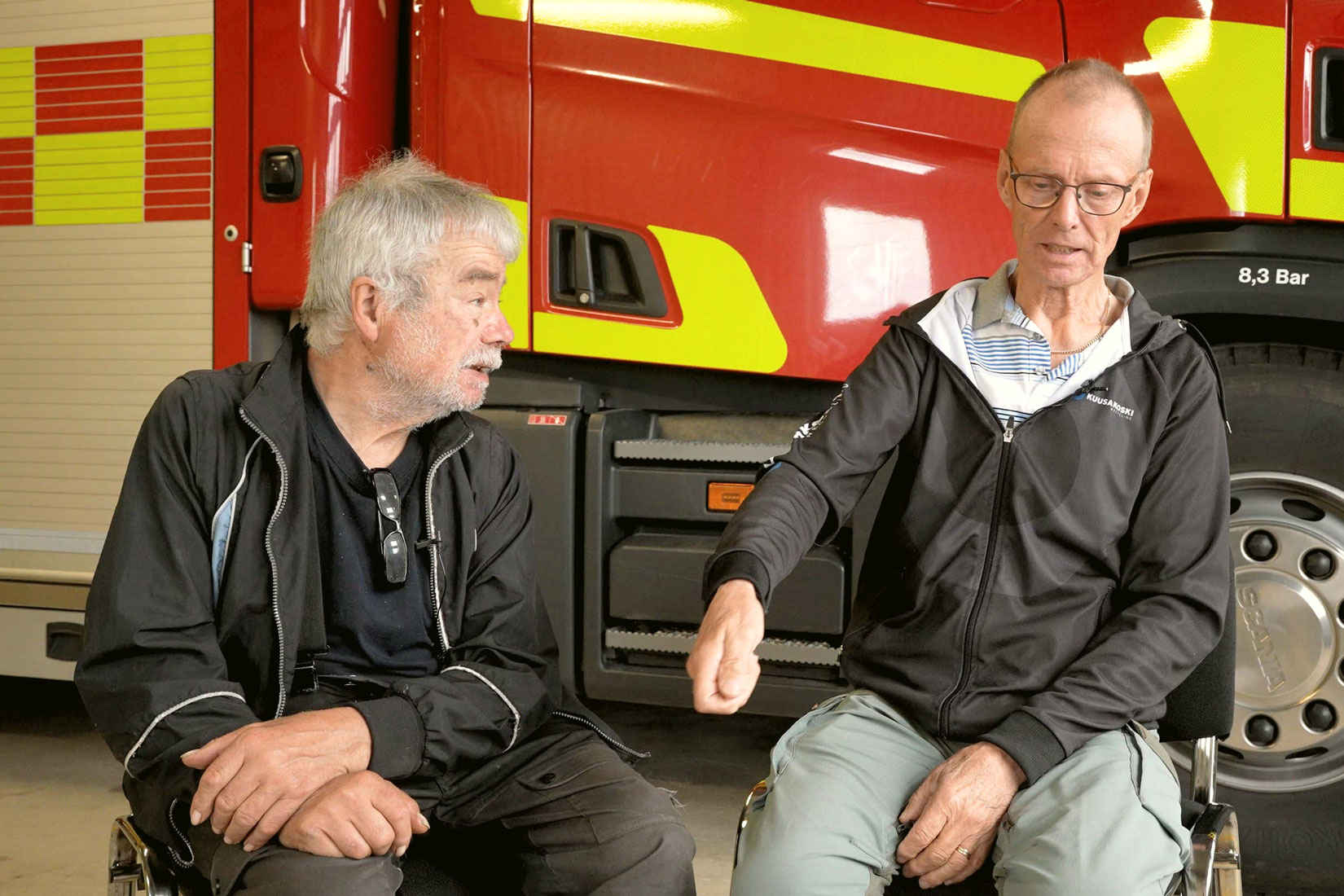
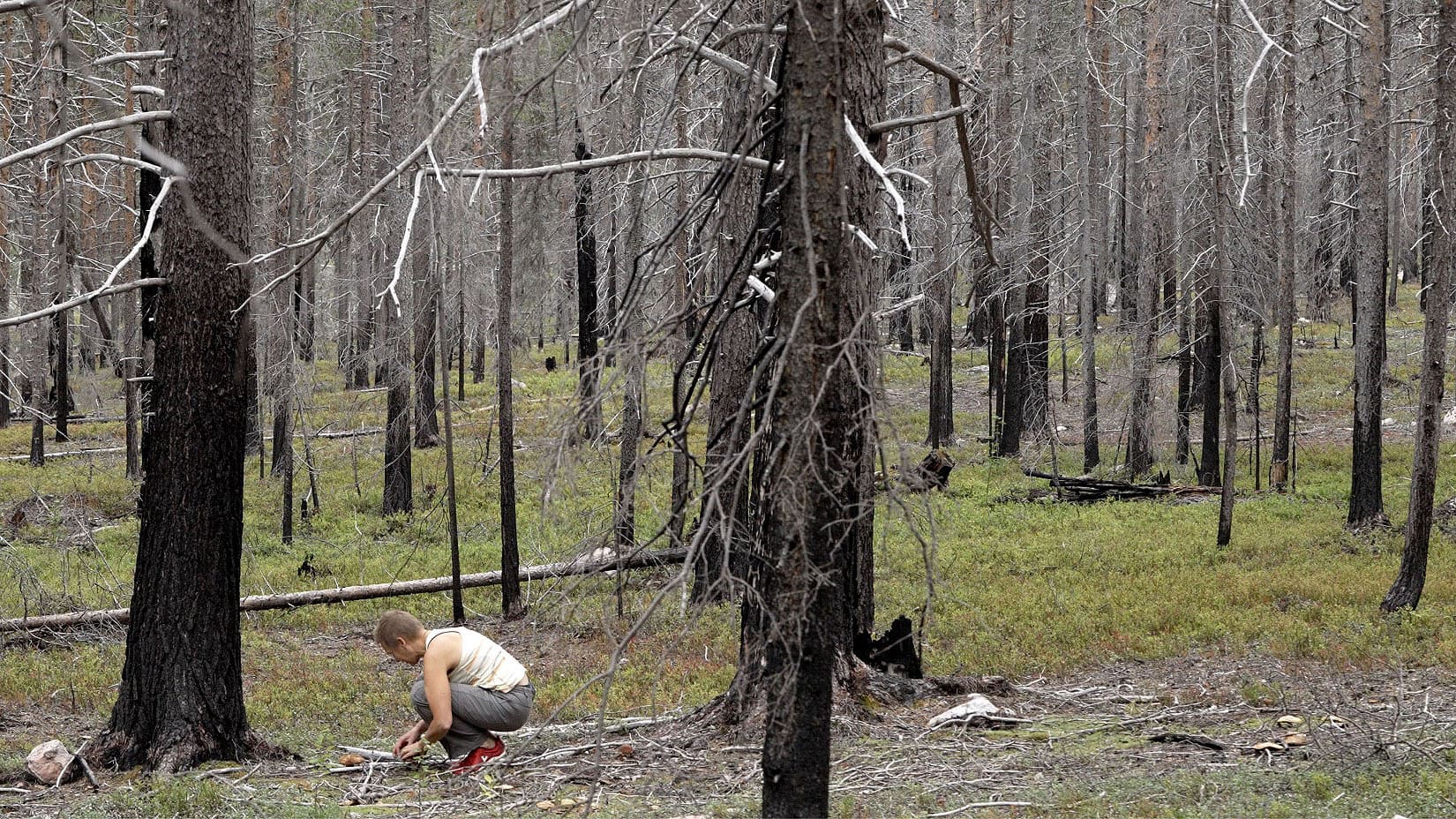
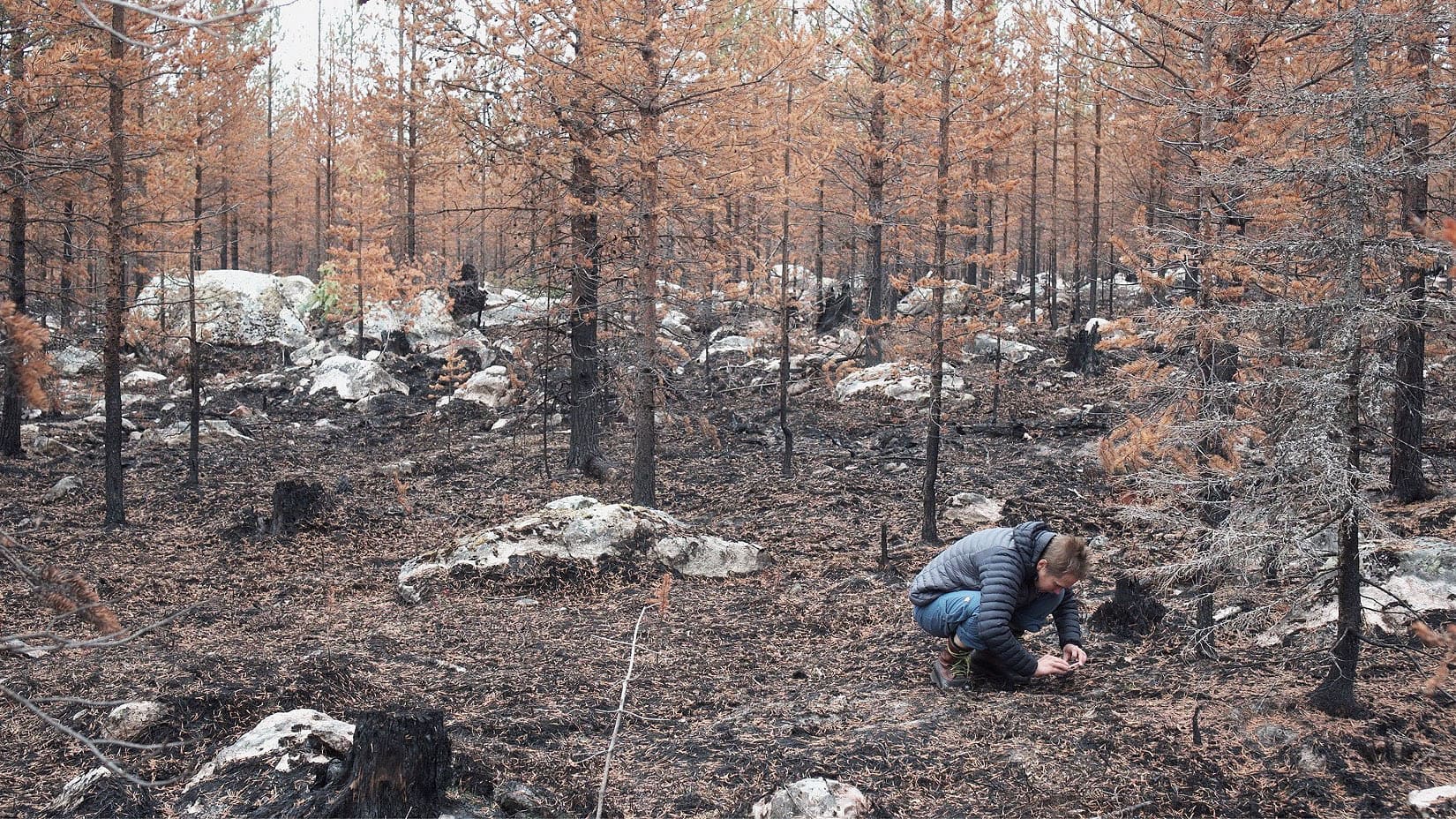
The impact of wildfires in Sweden, commonly claimed to be caused by climate change, has recently become a national and international concern. The overall aim of the inter-and supradisciplinary research project presented in this article is to analyse, document and draw attention to the local and Indigenous/Sámi stewardship of land, with specific regard to fire management, drought, and other aspects of climate change. The project situated within the growing field of Indigenous Land Based Education and Knowledge (Wildcat et al., 2014). The project brings together the disciplines of artistic research and visual documentation with the history of technology and science, environmental history, feminist technoscience, gender research and Indigenous methodologies as well as Sámi knowledge. Based on the methods available within these research disciplines, the project uses extensive fieldwork, archival research.
–
External Link

Acosta written contribution to the publication by artist Mabe Bethonico presented at the Biennale Architettura 2021, in Venice.
–
External Link

Ignacio Acosta and Arts Catalysts published a article in magazine that publishes work related to human-computer interaction.
What is the global impact of accelerated economic growth? What is the environmental and social impact of intensified growth in the tech sector and the continued proliferation of technologies that are ubiquitous in contemporary life?
–
External Link

Xavier Ribas, Louise Purbrick and Ignacio Acosta peer-reviewed article edied by Grayson Cooke (SCU) and Sally Babidge.
Trafficking the Earth documents the extraction of copper and nitrate from the Atacama Desert, Chile, and the accumulation of their values in metropolitan sites, the City of London and the houses of the British merchants in particular. Presented here as a photo-essay, it juxtaposes words and images to create constellations of meaning intended to disrupt a linear narrative of a past running smoothly into the present. The essay draws upon and tries to demonstrate a documentary practice that captures the collisions of time and the connected spaces of copper and nitrate mining as exemplary of an extractivist economy. The subject of the photography is the surplus of mining, its ruins, rubble and waste, which is offered not as a straightforward set of pictures but rather as perspectives through which the effects of global capitalism can be understood.
–
External Link

Xavier Ribas, Louise Purbrick and Ignacio Acosta publication on the occasion of the exhibition Trafficking the Earth at the Museo de Arte Contemporáneo [MAC], Santiago, Chile (08.09.2017 – 12.11.2017) and the symposium Visuality, Materiality and Mining held on the 08.09.2017.
This publication is conceived as a ‘folded exhibition’ and distributed among environmental activists, pressure groups, lawyers and school teachers in mining communities in Chile. Followed by an introductory statement, the publication contains 49 photographs and 7 texts elements from the exhibition piece.
–
External Link

Zine publication on the occassion of the exhibition Coquimbo & Swansea at the National Waterfront Museum of Swansea.
From the late 1820s, copper ore was extracted from the Region of Coquimbo, northern Chile and smelted in the Lower Swansea Valley, Wales. Copper was mined from remote sites and brought by mule to Las Compañias. One of Chile’s first industrial metallurgical centres and where smelting processes had been established. The ore and partly-smelted copper was shipped to the Lower Swansea Valley to be refined. The valley was heavily contaminated for more than two centuries, until the1960s and 1970s when conservation work was carried out to reclaim polluted land.
–
External Link

Zine publication with photographs resulting from fieldwork in Chuquicamata old tow on 20 September 2012 that document fragmentation and disintegration of the mining town.
–
External Link

Research on gated communities is moving away from the hard concept of a ‘gated community’ to the more fluid one of urban gating. The latter allows communities to be viewed through a new lens of soft boundaries, modern communication and networks of influence.
The book, written by an international team of experts, builds on the research of Bagaeen and Uduku’s previous edited publication, Gated Communities (Routledge 2010) and relates recent events to trends in urban research, showing how the discussion has moved from privatised to newly collectivised spaces, which have been the focal point for events such as the Occupy London movement and the Arab Spring.
Communities are now more mobilised and connected than ever, and Beyond Gated Communities shows how neighbourhoods can become part of a global network beyond their own gates. With chapters on Australia, Canada, Europe, South America, Asia, Africa and the Middle East, this is a truly international resource for scholars and students of urban studies interested in this dynamic, growing area of research.
–
External Link

Exhibition catalogues

From Mars to Venus: Activism of the Future published in catalogue edited by Claudia Emmert, Jürgen Bleibler and Ina Neddermeyer.
In recent decades, the extraction of raw materials has increasingly developed into an ecological, economic, political, and social problem of global proportions. Large-scale mining operations and the exploitation of ecological and social systems are one of the most serious threats facing the environment today. In many places, the effects are catastrophic and yet the fight over resources continues unabated. Since the resources on Earth are finite, there is a constant search for new mining sites that sometimes seem surreal, such as with deep-sea mining and deep-space mining.
Into the deep takes a critical look at the history and presence of the extraction of resources, which are inextricably linked to environmental destruction and colonialism. The many-layered complexities of mining for raw materials in the deep sea and in space are examined, as well as forms of resistance and activism against the exploitation of people and the environment. Drawing on Friedrichshafen’s history of industrialism, the exhibition also focuses on the raw material aluminum, the metal of flight, which requires large amounts of energy to be extracted from the rock bauxite and not only causes environmental damage, but also produces the toxic waste product red mud.
–
External Link
–
Download essay

Eduted by Boaz Levin/Kathrin Schönegg.
Image Ecology offers an survey of new approaches to environmental photography. In an attempt to document the systemic causes of the climate crisis, works in the exhibition explore their own material and social conditions. The exhibition disentangles photography as an ecological practice, a medium that is defined as much by the nexus of material, labor, energy and waste that its production and circulation require as by what it represents.
Featuring an extensive essay by environmental historian Jason W. Moore, and contributions by over a dozen international writers, the catalogue unpacks its own production process: from material supply chains to working conditions to wrapping and postage. Made possible by the Crespo Foundation.
–
External Link

Catalogue edited by Sarah Tuck and Louise Wolthers.
Drone Vision addresses questions of how visibility and verticality are intrinsic to drone technology and its meanings for artistic and political praxis. This book is based on the two-year research project Drone Vision: Warfare, Surveillance, Protest – a collaborative initiative between HDK-Valand, University of Gothenburg, the Hasselblad Foundation, NiMAC, Nicosia Municipal Arts Centre and the National College of Arts in Lahore.
Led by Dr. Sarah Tuck, the research project explores the affective meanings and implications of drone technologies on warfare, surveillance and protest.
–
External Link

El cuarto mundo is utopian place that allows us to reflect on the current state of socio-environmental crisis from the relationships between arts, sciences and nature. The title is inspired by the work of the Chilean artist Carlos Ortúzar (1935-1985). The sculpture, the result of a profound convergence between arts, crafts and public space, was materially recreated to inaugurate the biennial and formed the orientation nucleus for the various venues where this artistic meeting took place. In these pages you will find together the 17 exhibitions carried out with the participation of more than 50 national and international artists in different cultural spaces. Read, download and share the catalog of «El cuarto mundo», the 14th BAM held in 2019.
–
Extenal Link

Edited by Claudia Emmert, Jürgen Bleibler and Ina Neddermeyer.
Drones are considered the most important war technology since the invention of the atomic bomb. Drones can be deployed remotely, e.g. for targeted military operations, without endangering any other crew on board. At present, drones are not yet autonomous systems that make their own decisions. However, in combination with artificial intelligence, they can become sinister weapons of war. This development into learning and autonomously operating machines raises ethical questions that need to be considered, especially against the backdrop of economic and military interests.
As unmanned aerial vehicles, drones are not only used in the military sector, but also for a wide variety of civilian purposes, including border control, surveillance, data collection, agriculture and the service sector. Drones have thus arrived on the mass market.
Today’s drones are further developments of unmanned balloons, remotecontrolled weapons and model airplanes for civilian and military purposes. Based on this historical context, the exhibition examines the use of drones and their hybrid function as toys, war technology and economic factor. As a technology that unites absolute opposites, the exhibition shows its contradictory nature in all its facets.
–
External Link

Copper Geographies displayed during exhibition with 50 photobooks by artists and artist collectives whose work urgently responds to the climate crisis.
The artists represent 36 different countries from six continents, and their projects have been created in regions that span the entire planet. Their photo books offer a striking comparative analysis of a global phenomenon that has reached a state of emergency.
–
External Link

Publication on the occassion of exhibition at MSSA and Bienal de Artes Mediales.
–
External Link

Exhibition catalogue by Ignacio Acosta and Jakub Bojczuk. Curated by Agnieszka Kulazińska.
Mapping Domeyko , is a project inspired by the expeditions of Ignacy Domeyko. Through a constellation of materials, including drawings, historical photographs, objects and new photographic series, the project builds a visual archive that speaks about the relationship between history, mineralogy and migration.
Based on My Travels (Diaries in Exile), the project maps out Domeyko’s global movements, exploring his blurred national identity between Chile, Lithuania and Poland.
–
External Link
–
Download catalogue

Publication of Noorderlicht Festical, Arena a forensic look at the traces left behind in the landscape, running from 22 May through to 3 July at Museum Belvédère in Heerenveen. 21 artists from around the world unearth the stories that take place on and under the skin of the landscape.
We live in a time when our global culture has subordinated nature. It has become almost impossible to experience unspoilt land, no matter how far we direct our gaze.
What remains once humanity and its thirst for action has left the stage, in search of ever-greener pastures?
–
External Link

Selected features and interviews

Errázuriz, Maya; Pohl, Nélida & Valdés, Catalina (Eds.)
Fundación Mar Adentro/Instituto de Ecología y Biodiversidad
The publication brings together works from diverse areas of contemporary visual arts, artistic residencies, and other practices that articulate creation and research, communities and their territories, local and sensitive knowledge, knowledge from ecology sciences, and diverse strategies of environmental activism, recognizing that it is a multiple and growing movement that can characterize contemporary Chilean art.
–-
External Link
—
Download Feature

Christian Alonso, Universitat de Lleida
En este artículo examinamos cómo la obra de Ignacio Acosta interroga las dinámicas extractivas del capitalismo global y articula narrativas visuales en diálogo con las resistencias de las comunidades locales e Indígenas. Analizamos los proyectos centrados en la extracción de cobre en Chile y de hierro en Suecia, y adoptamos un enfoque cualitativo basado en las ciencias sociales, en particular, en la ecología política. Sostenemos que la práctica del artista evidencia la dimensión material, financiera y biopolítica de estos elementos metálicos; muestra cómo las infraestructuras extractivas agotan los recursos, destruyen la biodiversidad y despojan a las comunidades; y visibiliza las estrategias de resistencia cultural y política frente a las operaciones mineras. Concluimos argumentando que el valor de la obra de Ignacio Acosta radica en su capacidad para repensar los vínculos entre minería, colonialismo y neoliberalismo, cuestionar las paradojas de los marcos legales y del capitalismo verde, e imaginar futuros vivibles desde las experiencias de los territorios afectados.
–-
External Link
—
Download Article [Spanish]

Book by Kathrin Maurer.
Acosta’s work feautured in publication that gives a comprehensive overview of how civilian drones sense the world and how they build the aesthetic imaginaries of our communities. In The Sensorium of the Drone and Communities, Kathrin Maurer shows how drone sensoria can change our understanding of human communities by constructing imaginaries of social communities based on decentralized and fluid sensing processes. Maurer takes an aesthetic approach to technology, working with two understandings of aesthetics.
–
External Link

Book by Maja and Reuben Fowkes.
Copper Geographies was feagure in a timely introduction to the fields of environmental art, art and ecology, art and climate change, art and activism, and art in the Anthropocenea.
Global awareness of climate change is increasing, and the scientific evidence is incontrovertible: an environmental crisis is upon us. Art and Climate Change presents an overview of ecologically conscious contemporary art that addresses the climate emergency, as artists across the world call for an active, collective engagement with the planet, and illuminate some of the structures that threaten humanity’s survival.
–
External Link

Edited by Danièle Méaux and Jonathan Tichit.
Le recours insistant au terme «anthropocène» signe une crise civilisationnelle profonde. Les assises, sur lesquelles les sociétés occidentales se sont senties pendant de longues années solidement établies, paraissent désormais précaires. La confiance autrefois accordée au progrès technique et aux acquisitions scientifiques se trouve ébranlée. Nombreuses sont les œuvres contemporaines qui travaillent à problématiser et à penser les évolutions de nos modes de vie, de nos valeurs, de nos relations au vivant, au temps, au progrès ou au savoir. Il s’agit dans cet ouvrage d’analyser la façon dont ces réalisations donnent à réfléchir, s’inscrivant dès lors de façon féconde dans le débat public.
–
External Link

Edited by Danièle Méaux.
L’«anthropocène» signe une crise civilisationnelle profonde. Les assises, sur lesquelles les sociétés occidentales se sont senties pendant longtemps solidement établies, paraissent désormais précaires. La confiance accordée au progrès technique et aux acquisitions scientifiques est ébranlée.
Nombreuses sont les œuvres photographiques contemporaines qui s’attellent à problématiser et à penser les évolutions de nos modes de vie, de nos valeurs, de nos relations au vivant, au temps ou au progrès. Il s’agit dans cet ouvrage d’analyser la façon dont ces travaux donnent à réfléchir, s’inscrivant de façon féconde dans le débat public.
–
External Link

Ignacio Acosta contributes to NGO publication about mining and Resistance in Fennoscandia, Finland, Sweden, Norway amd Sápmi
–
External Link

Video interview published in the context of the Human Nature exhibition.
–
External Link

By Jan van Poppel.
Copper Geographies reviewed by jorunal in The Netherlands
–
External Link

Global Architecture Platform, a new independent digital editorial project based on the production and transmission of original architectural knowledge presents a Copper Geographies.
–
External Link

TANK, an independent UK-based magazin, prsents a visual essay of Copper Geographies.

External Link

Interview with Tom Griggs for Fototazo, a non-profit organization based in Colombia.
–
External Link
–
Download Interview

Reviews

Slideshow

Review of exhibition From Mars to Venus by Amalia Cross
—
External Link
—
Download Review [Spanish]

Review of exhibition Archaeology of Sacrifice by Ana Staab.
–
External Link
–
Download Review

Review of exhibition by Ellen Lapper.
–
External Link
–
Download Review/a>

Review by Chiara Sgaramella
–
External Link

Review by Tom Jeffreys.
–
External Link

Review by Diego Chocano.
–
External Link

Review by Belgian curator, blogger and art critic Régine Debatty.
–
External Link
–
Download Review

The Photography Magazine Salon during PARIS PHOTO edited by Editor Federica Chiocchetti.
—
External Link