Conferences, symposiums, workshops

Ignacio Acosta in collaboration together with Sámi author and educator Anna Nutti Wiandt and field biologist and ecophilosopher Linda Ellegaard Nordström organised the Queer Sámi Language and Embroidery Workshop at Samernas Bibliotek, the Sámi library during the Regnbågsveckan Jokkmokk [Rainbow Week]. This workshop explored gender inclusive possibilities of Sámi languages. Participants gathered around the library’s collection and together compiled a list of non-binary and non-dualistic gender words such as “Bonju” [queer] and “Sån” [they/them] and embroidered them into pieces of fabric.
–
External Link

Neque porro quisquam est qui dolorem ipsum quia dolor sit amet, adipisci velit...

In this presentation, Macarena Gómez-Barris traces the practices of Indigenous activists, intellectuals and artists that take place in extractive zones (regions of South America known for their biodiversity and a long history of exploitative extraction of natural resources), which resist and reject the terms of racial capital and the continuing legacies of colonialism.
Macarena Gómez-Barris is a writer and academic, with a focus on decolonial environmental humanities, authoritarianism and extractivism, Latina queer epistemes, media environments, racial ecologies, cultural theory and artistic practice.
The presentation is preceded by a visit to the solo exhibition of the artist Ignacio Acosta, From Mars to Venus. 13th Leandre Cristòfol Art Biennial – Prologue, curated by María Íñigo Clavo and Christian Alonso.
–
External Link

Evening dedicated to three artists who delve into themes of memory, power, and identity through the exploration of landscapes and seascapes. This event was associated with the exhibition featuring Ingrid Pollard, the 2024 Hasselblad Award winner. In her work, Pollard revisits the landscape as a cultural construct that illuminates issues of power, representation, and the narratives that often remain obscured.
During the evening, the audience has the opportunity to hear from artists Ignacio Acosta, Jorma Puranen, and Lotta Törnroth, as they share insights into their distinctive works.
–
External Link

Árbbediehto for Dummies: adapting, transferring and visualizing traditional Sámi land based knowledge.
In terms of climate change, Indigenous peoples are commonly portrayed either as victims of its negative impacts or completely ignored, or as today, due to renewed industrial colonization, desire for natural resources within Indigenous territories – depicted as being “in the way” for the necessary actions to mitigate climate change. Indigenous people and local expertise, knowledge traditions and transmission, as well as agency are in all cases obscured. This roundtable is based on the inter- and supradisciplinary research project Indigenous perspectives on forest fires, drought and climate change: Sábme, Uppsala University, Centre for Multidisciplinary Studies on Racism/Indigenous Studies, aiming at analyzing, documenting and bringing forward Indigenous Sámi knowledge and expertise with regard to land management, wildfires and extreme weather events due to climate change through the lenses of artistic research/visual documentation.
The roundtable investigated the holistic experience-earned and land based Sámi traditional knowledge system Árbbediehto (“inherited knowledge”), the science of surviving and thriving in the arctic region. We examined the challenges of Árbbediehto in times of climate change, colonization relation to transfer land based, language dependent traditional indigenous knowledge and how to reclaim and integrate Árbbediehto lost through colonization. We further examined the role of visual/artistic research in relation to Árbbediehto. How can we convey Árbbediehto to those who did not learn, and to the surrounding society to challenge and put an end to destructive settler colonial practices? Participants: Per-Eric Kuoljok, Sámi translator and reindeer herder; Gun Aira, Sámi teacher, educator and reindeer herder; Liz-Marie Nilsen, Sámi journalist and documentarian; and Ignacio Acosta, artist and researcher. After a round of short presentations we invited discussion on the theme from interested community and scholars, hoping to establish new collaborations and exchanges.
–
External Link

Organised by Luis Berríos-Negrón.
The Geopolitics of the Forest hosts artist and researcher Ignacio Acosta along with forest ecologist and historian Lars Östlund to discuss fires and land stewardship in the forests of Swedish Norrland. Ignacio will make a presentation based on his research focusing on “understanding Indigenous land stewardship” and “the negative impacts of the nation state disrupting traditional Indigenous ways of managing the land, where burning is one important aspect.” As expert respondent, Lars moderates a follow-up conversation chaired by Luis Berríos-Negrón.
The Geopolitics of the Forest working group meets regularly to share their research on the geopolitics of the forest across art, architecture, political science and landscape ecology. The group are exploring how to develop holistic and interdisciplinary understandings of the human / forest relationship that can represent multiple, overlapping and conflicting interests. They aim to develop a shared critical space for new collaborative artistic research projects which deal with the ethical complexities of forestry in relation to the climate crisis, to reconsider the language and aesthetics of sustainability.
Lars Östlund is Professor at SLU’s Department of Forest Ecology and Management. He is focusing on “forest history” where he works to try and understand the relationship between people and the forests from a long time perspective.
–
External Link

Ignacio presents his latest video From Mars to Venus: Activism of the Future during conference in collaboration organised between the Climate & Colonialism research project at the Paul Mellon Centre and Autograph ABP.
The arts have long been concerned with highlighting the ongoing histories of resource extraction and its repercussions. This symposium asks: what next? By bringing together researchers, artists, designers and activists from a range of backgrounds, this event considers local projects in intersectional, granular detail, to collectively re-evaluate the relationship between the arts, extraction and activism, both historically and in the present.
The two days are framed around three broad themes: Colonial and extractive histories, Reparative and fragile ecologies, Environmental justice and legal rights.
Speakers and participants include:Ignacio Acosta, Mónica Alcázar-Duarte, Tobah Aukland-Peck, Eline Benjaminsen, Nancy Demerdash, Radha D’Souza, Francisco Gallardo, Hit Man Gurung, Sasha Huber, Elias Kimaiyo, Syowia Kyambi, Adrian Lahoud, Godofredo Pereira, Marie Petersmann, Julian Posada, Sheelasha Rajbhandari, Gabriela Saenger Silva, Sakiya, Audrey Samson, Marie Smith, Jonas Staal, Gerald Torres, Wilfred Ukpong, Rahul Ranjan and others.
The symposium is convened by Sria Chatterjee (Paul Mellon Centre), Mark Sealy (Autograph) and Bindi Vora (Autograph).
—
External Link
—
Video presentation

Coordinated by Anna Maria Guasch (Universitat de Barcelona), Nasheli Jiménez (independent researcher) and Chiara Sgaramella (Universitat Politècnica de València).
According to David Garneau (2020), Métis artist, curator, and critic, Indigenous art is an emerging category that extends and adapts First Nations Peoples’ ways of being and knowing to the contemporary moment and well beyond the sites of Indigenous territories of origin. Within this context, Indigenous peoples from around the world are increasingly seeking to establish connections in order to produce international networks and a collective consciousness. If, as jurist and Blackfoot First Nation elder Leroy Little Bear states, in Indigenous culture everything is under flux, then the concept of time is dynamic but without movement. In this regard, Chickasaw academic Chadwick Allen (2013) argues for a “trans-Indigenous” research programme within the field of Indigenous Studies that would allow for a site of enunciation embedded in the specificities of the local Indigenous while simultaneously grappling with the complexities of the global Indigenous.
Following this spirit of establishing a simultaneous interplay between the synchronic, the diachronic, and the transdisciplinary by recognizing the mobility and multiple interactions of Indigenous peoples, cultures, histories, and texts, we invite artists, theoreticians, and researchers to participate in the Research Seminar “Transindigeneity: Between Local Specificities and Global Complexities”. Some of the key questions we aim to address are: What forms of local specificities inform and/or travel from local contexts to the global stage? How can Indigenous artistic production address this migration between the local and the global? What configurations do Indigenous ways of being and knowing come into play in the global art scene today? And what points of tension are evidenced through this displacement from local Indigenous realities to global points of contact between different indigeneities worldwide?
Presentations include Devenir Universidad Ursula Biemann (artist and researcher); Arte e indigenismo: una genealogía Anna Maria Guasch (Universitat de Barcelona); From Mars to Venus: Activism of the Future Ignacio Acosta (artist and researcher, Uppsala University); Towards a Decolonial Theory of Visual Culture Nasheli Jiménez (independent researcher)
–
External Link

Ignacio Acosta in conversation with Sarah Vanden Eede.
OCEAN / UNI is an initiative dedicated to art, activism, and science that invites fluid thinking with the Ocean as a way to move beyond the binaries of land and sea. Its curriculum provides students, researchers, and the public access to wide-ranging ideas and explorations through regular live sessions, reading groups, small-scale workshops or activations, and other online material, free and accessible to everyone on Ocean-Archive.org. Aiming to complement and enhance land-based understanding of the Earth, it covers a wide range of ecological, political, aesthetic, ethical, and scientific topics around the realities and futures of the Ocean.
Between October and December 2023, OCEAN / UNI dives towards the deep sea, adopting a cross-disciplinary lens to think from the furthest spaces of our planet’s expansive bodies of water.
By interrogating the idea of the deep sea as a commons and a space of shared value, easily translatable to economic wealth and benefits, the Fall semester works to re-state the deep sea as a living reality saturated with meaning and foundational to life itself: as a metaphor for the unknown, a place where exciting creatures flourish and meaning sprouts. This new exploration and mining frontier is a horizontal one, thousands of meters below the sea surface, and portrayed by extractivists as a “potato field” or “underwater desert”, ready to be harvested for the common good. Yet, the deep ocean and the seabed are rich with diverse and unknown life, thriving around vents, ridges, plains, and seamounts.
Framing the fight against this renewed extractivist assault upon one of the four global commons from an interdisciplinary, culture-led viewpoint, we want to assemble a diverse front that takes an affective, community-led approach to care and custodianship of the deep seas. Cultural relations with the deep seabed make it so much more than a “common heritage of mankind” to be partitioned and extracted from to provide short-term profit for a small number of humans. What would it take to maintain a thriving deep sea and seabed, and ultimately a future in which the Earth remains a liveable planet for allkind?
Through a series of five live online lectures and interactive “activations” held with diverse speakers—from scientists to artists, from lawyers and policymakers to activists and Indigenous leaders—Culturing the Deep Sea: Towards a common heritage for allkind aims to think around the constructions and representations that shape human–ocean relations, and look to art and critical thinking to raise alternatives. Through collective unlearning as a radical act of deep ocean literacy, we hope to empower ourselves as a community to intervene in dynamic decision-making environments around deep-sea mining that proceed alongside the program.
–
External Link
–
Link to recording
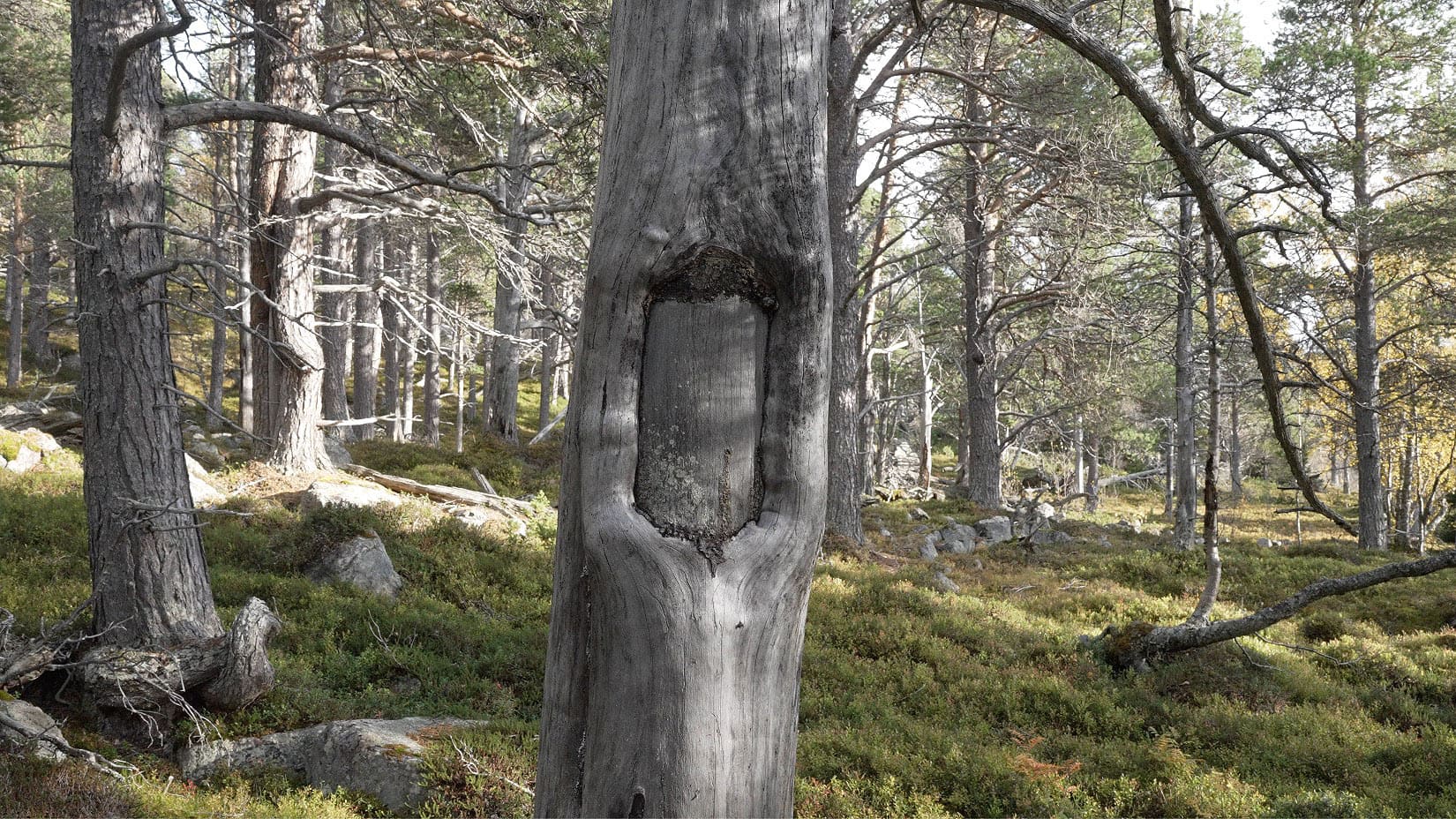
Ignacio Acosta in conversation with Juliet Ferguson.
In this talk, Ignacio talks about his project Copper Geographies and how he explores the global flow of mined copper.
He describes how he presents this series of fieldwork explorations of geographically disparate landscapes historically connected by copper. Using research and investigative skills, he maps sites of transformation along the production network and commodity chain, documenting the mutation and transformation of copper from raw material to capital; through ore, smelted commodity, stock market exchanged value, assembled material and waste.
Copper Geographies discloses the uneven spatial conditions in which the material circulates by connecting the ecologies of resource exploitation in the Atacama Desert with the global centres of consumption and trade in Britain, and by making visible its return, hidden in manufactured goods, to the territories it originated from.
Ignacio also discusses his latest project Not a Pearl, a new commission by the Gewerbemuseum Winterthur for the Mining Photography exhibition. The installation, consisting of 36 silkscreen prints and texts, questions the position role of the canton of Zug in the Swiss extractive landscape as global trading hub and offshore haven for shell companies.
–

External Link

Organised by Hannah le Roux.
The idea of the commons has entered urban studies as a way to describe the shared resources that shape cities. In contrast with this positive view, histories of north-south extractivism show the territorialization of indigenous common lands and praxis. This event suggests a third, intersecting definition of a commons. Using transdisciplinary and cross-site studies, it explores how Western techné reshapes and disturbs the commons on the African continent, through acts of survey, settling and servicing the land. At the same time, the use of such techné might be reconsidered with a view to reparation.
The event takes place on the anniversary of an important day in Africa’s de-colonial history: the student uprisings against apartheid that began in Soweto on June 16, 1976. The event uses as its datum a typical domestic property, lying 1632m above sea level, that was impacted by three apparently unlinked, and little remarked on moments of Swiss technical practice. These dimensions will serve as a starting point to explore other aerial, terrestrial and sub-surface positions and disturbances, amplified through creative research, in conversations that reach towards the repair of the Commons at a planetary scale.
Three sessions are bracketed by three artists projects created for this event, following the course of the day from sunrise to sunset in Soweto. We conclude with an apéro designed around Swiss/Basotho food histories. Together, they offer new perspectives on these common histories.
–
External Link

Workshop in collaboration between Traces of Nitrate, Laboratorio de Artes Gráficas del Desierto de Atacama (LAGDA) and the OPEN research group at the RCA.
Presentations by Professor Anna Korre, Environmental Engineer, Royal School of Mines; Dr Andrew Hughes, Groundwater specialist, British Geological Survey; Dr Evi Petavratzi, Mineral commodity specialist, British Geological Survey; Eliza Collin, Wet Zones; Dr Sarah Cheang, Vanished Rivers and Indentured Labour, RCA.
Followed by LAGDA workshop, creation of a new textile work AGUA, DÓNDE ESTÁS? and its installation of in Hyde Park.
–
External Link

Chaired by Rebecka Wigh-Abrahamsson.
This conversation between Iman Jackeline Brown, May-Britt Öhman and Ignacio Acosta opens questions regarding the the connection between depletion of the earth’s resources and colonialism. It revolves around Indigenous people’s demands for climate justice across the globe.
–
External Link

mirko nikolić and Ignacio Acosta.
Let’s talk about extractivism, can we? Critical practice at the time of “security” and “sustainability” paradigms in raw materials industry.
A big policy shift is taking place across the Global North, with governments and industries making a rapid “shift” from fossil fuels towards decarbonised economies and energy grids. This urgent and needed transition, however, is underpinned by significant socio-environmental issues. Low-carbon technologies are all highly reliant on minerals, which are set to be procured by the mining industry, a largely destructive and unjust industry.
Across the peripheries of the Global South, and increasingly of the Global North, exponential rise in mining projects is met with local and translocal opposition, communities seeking to protect their natural environments, livelihoods and culture. With the dynamics of “shock capitalism,” the governments and the industry often fast-track processes, police and criminalise activists, and, increasingly, “greenwash” projects and through ever more complex schemes engineer a “social licence to operate.” (Dunlap & Verweijen, 2021). This tendency of equating extraction with sustainability is compounded with an intensifying attempt of principally richer nation-states to (re)define mining as central to “security” (Riofrancos, 2022).
The two of us have in our individual practices been following the developments of the mining industry in different geographies for years now, with particular focus on environmental justice struggles. We observe that it is getting more complicated and sensitive to relate with frontline communi-ties. On the one hand, they are under immense socio-psychological pressure from extractive expansions. On the other, being an urban academic/artist is a constantly complicated situatedness, since academic and cultural infra-structures and actors are sometimes involved in more or less visible opera-tions which can be likened to normalisation or validation of extractivism.
In this state of things, we believe that long-term and ethical art/documentary strategies can offer new ways of re-examining global ecology through local and Indigenous knowledge. In our shared discussion, through this experience and the lens of our ongoing AR projects, we will discuss and invite a conversation around these questions:Within the sharpening hegemonic consensus that more mining is neces-sary (e.g. for national security), how can artists-researchers maintain a space in the society for radical critique of extractivist model? How do we divest from contributing “fixes” or “solutions” to the mining sector, i.e. making it more “responsible,” and challenge the mainstream logic and political paradigms? How can AR with a critical approach be used to document, analyse, discuss and provide a basis for asserting indigenous knowledges in the context of the nation-state and climate change debate dominated by state and industry actors?
–
External Link

Klaus Baumgardt (support group Save the Elbe) and Ignacio Acosta led alternative harbour tour in Hamburg.
Before photographs travel around the world as memories that have become images, various raw materials have to be brought together for their production. The port of Hamburg is a transhipment point for this. In a barge, the environmental activist/chemist Klaus Baumgardt and the Chilean artist Ignacio Acosta take us to the places in the port where, among other things, copper, coal and oil are processed. They show us the widely ramified (neo-)colonial trade routes of photography and the traces they leave in our environment.
–
External Link

Ignacio Acosta presents ongoing research in Sápmi at international conference focusing on collaborative visual research. It takes place within the framework of “GPS400: Centre for Collaborative Visual Research”, a six-year faculty-wide research center established by Rector of the University of Gothenburg in April 2019.
–
External Link

Moderated by Dr Sarah Tuck.
The seminar addressed issues arising from the current research project Indigenous perspectives on forest fires, drought and climate change: Sápmi.
Led by artist and researcher Dr. Ignacio Acosta in collaboration with Sámi journalist Liz-Marie Nilsen and Sámi Associate Profesor in Environmental History Dr May-Britt Öhman, share their ongoing research Indigenous perspectives on forest fires, drought and climate change: Sápmi funded by FORMAS and is based at Uppsala University, Centre for Multidisciplinary Studies on Racism (CEMFOR). The seminar considers how proposed climate change solutions have intensified disruption and dispossession in Sábme and how an artistic research project developed collaboratively with Sámi communities can be used to document, analyse, discuss and provide a basis for promoting indigenous knowledges to the nation-state and climate change debate.
HDK-Valand aims to create an environment where everyone has good knowledge of equal treatment issues and where we talk about and improve the environment together. For several years, we have had a seminar to welcome new and old students and staff at the start of the semester in September and another during the spring semester, as a follow-up.

Presention at the Centre for Iberian and Latin American Visual Studies Roundtable to discuss the politics of extractivism and the effects of these politics in communities and the environment.
–
External Link
–
Link to London Mining Network

Ignacio tokes part in Ecology: Galvanising Climate Action Across the Arts, a series of eight online seminars which brought together activist-academics working across the arts to interrogate the following question: ‘How might cultural researchers galvanise more urgent and effective responses to the climate crisis to remedy the severe inadequacy of the actions currently being set into motion by governments and corporations’.
This lecture explores the political ecology of mining across the globe. The excavation, extraction and exploitation of minerals – justified by the promise of immediate accelerated economic growth – means that spaces inhabited by communities become ravaged by desertification, contamination and expropriation, and sites of political and environmental dispute. It hones in on ways in which local and transnational acts of resistance are making use of technologies (such as drones) in order to monitor the impacts of extractive industries and develop micropolitical strategies. These interventions position geological and technological forms, as well as human and non-human relationships, in the same landscape. Ignacio focuses on collaborative working methodologies as an important, indeed essential, strategy in the investigation and representation of sites impacted by extractive violence.
This lecture delves into the research process of my most recent project Archaeology of Sacrifice (2020). Through the discovery of a Celtic sacrificial site at Mormont Hill – a limestone and marl quarry located in the Swiss canton of Vaud – the two-channel video installation with surround sound design unveils how the notion of sacrifice has transitioned from ancient sacred rituals to its contemporary meaning within extractive capitalism. In a continuous interplay between fact, fiction and scale, meditative landscapes of typically inaccessible areas are juxtaposed with archival footage, drone views, investigative close-ups and photogrammetry-based 3D modelling. While acknowledging the Anthropocene is built on an erasure of its racial origins, Archaeology of Sacrifice reflects on the precariousness of our planet and its unsolicited submission to humanity.
–
External Link
–
Link to event recording

Humanity is facing extinction. When will we realise we’re all in the same boat? Such sweeping statements continue to feature in mainstream approaches to what has been termed the Anthropocene. This indicates a persistent denial of the historical, social and geographical differentiations characterising both the effects of and responsibilities for climate change and ecological disasters. A growing body of scholarship critical of this denial has highlighted the role of colonialism and racism in issues now debated under the rubric of the Anthropocene, and the practice of extractivism that has been central to that role.
This workshop builds on relevant critical scholarship by approaching climate change and ecological disasters as grounded in and productive of extractivist colonialism and racism but also seeks to contribute to it by way of a specific methodological focus on aesthetics. It does so by considering aesthetics not as indexing a set of formal features or notions of taste, but rather as a medium through which sensibilities and insensibilities are produced through materiality and distributed across geography and the bodies inhabiting that geography.
Working from this materialist and relational understanding of aesthetics as both ethics and politics, we ask, what are the aesthetic practices that feature in mainstream approaches to the Anthropocene and critical responses to it? How have these practices approached the role of extractivist colonialism and racism in climate change and ecological disasters? What are the various aesthetic registers and modes in which they have approached this role and how might these approaches be reproducing or contesting the Anthropocene’s extractivist colonialism and racism? What materially grounded notions of “humanity” and its variously prefixed cognates shape and are shaped by such approaches?
–
External Link

Xavier Ribas and Ignacio Acosta presented the project Traces of Nitrate in a seminar organised by José Ignacio Vielma and moderated by Andrea Jösch.
–
External Link

This international symposium aims to examine how contemporary artworks engage with the concept of the Anthropocene. Etymologically meaning ‘Age of humans’, this term defines a new geological epoch in which humankind has become the central actor and is leaving a decisive mark on the planet. In line with the debates of our time, the presentations will therefore focus on artistic works that challenge the ethical and political choices that govern our ways of life.
–
External Link

Ignacio Acosta presents at the University of Bristol as part of an interdisciplinary workshop that explored how drones and other monitoring technologies are being implemented as part of biodiversity conservation initiatives around the world.
–
External Link

In this conversation, as part of the RCMC Thinking With series, Macarena Gómez-Barris discusses her work notably in The Extractive Zone: Social Ecologies and Decolonial Perspectives (Duke UP, 2017) and Beyond the Pink Tide (UC Press, 2018).
This conversation is part of the Caring Matters conference, which is part of the international collaborative research project Taking Care – Ethnographic and World Cultures Museums as Spaces of Care.
We invite Gómez-Barris to think with us for she insists on theorizing the violence of extractive economies. In our ethnographic museums, we are interested in “mining the museum,” in connecting the objects within our collections to longer histories of resource extraction, of species extinction, of human and cultural degradation. At the same time, thinking the “extractive zone” takes these collections as possible sites for re-imagining other more caring relationships, more careful futures.
Macarena will be in discussion with Ignacio Acosta, Maarten Vanden Eynde and Wayne Modest.
–
External Link

With Anna Santomauro (Curator, Arts Catalyst) artist Ignacio Acosta screens and discuss his recent work in documentary film and photography, that explores the political ecology of mining across the globe. Introduced by Dave Griffiths, Senior Lecturer in the Department of Art & Performance, this event marks the launch of MA by Research in Art & Science Stories. This new postgraduate programme works in partnership with Arts Catalyst, a leading international organisation that works across art, science and technology to produce ambitious new projects that critically engage with our changing world. https://www.artscatalyst.org
—
External Link

Organised by Sally Labern.
The Radical Imagination finds us as social practice artists at the nexus of activism and the art we make on the multiple platforms that we use; here we shall explore what this emerging practice feels like from the inside out.
In this SAN digital meetup, we throw the doors open to explore the diverse works of ten social practice artists in small decentralised workshops, and ask how our collective practices can inform and lead theory around the radical imagination, rather than the other way around.
The enforced ‘hiatus’ that we are experiencing during the Covid19 pandemic has led many of us out ‘on to the streets’ either physically or in digital real time, during the huge social and political upheaval and resistances taking place across the world; Critical responses to the inequalities thrown up by the violence of capitalism have created opportunities for us to foster collective resources to inform a symbiotic Social Art Network that values differences at the heart of The Radical Imagination. We know from Me Too, LGBT+ rights, Black Lives Matter, the fights for climate, housing and poverty justice, that intersectional struggles require us to decolonise ourselves as a part of developing new ways of working. So what mutual support structures do we need to develop as new, radical forms of collaborative practices come into being?

Event to visit and discover the worlds and current projects of artists in residence at La Becque, through installations, performances, screenings and discussions in the site’s workshops and living spaces.
–
External Link

Curated by Arts Catalist and University’s CREAM .
A two-day gathering at the University of Westminster that brought together artists, academics, activists and human rights experts to collectively explore the politics of extraction across the globe and the role that its operations played on environmental, ecopolitical and societal levels. Through talks, workshops and roundtable discussions, over two days the partciplants delved into multiple case studies that exposed the entanglements between extractive violence, financial networks and poisonous infrastructures. Together they explored different forms of resistance, particularly those that seek to carve out spaces of autonomy and solidarity where the structural violence enacted through the exploitation of natural resources – of minerals, labour and cultures – can be countered.
Participants included Ignacio Acosta, Lise Autogena, Bobby Banerjee, Suzanne Dhaliwal, FRAUD (Audrey Samson and Francisco Gallardo), Gaia Foundation, Que Kenny, London Mining Network, Margarida Mendes, Ainhoa Montoya, Rachel O’Reilly, Pluriversal Radio, Louise Purbrick, Xavier Ribas, Sim Chi Yin, Elena Solis (Ecologistas en Acción), Jol Thomson, and Neal White.
The Extractable Matters Assembly was coordinated with Professor Neal White, co-director of the Centre for Research and Education in Art and Media (CREAM). The Assembly was organised in partnership with Arts Catalyst, non-profit contemporary arts organisation that commissions and produces transdisciplinary art and research. The Assembly is part of Resistance Labs, a series of discursive events, workshops and broadcasts that bring to the forefront existing forms of solidarity between various anti-mining movements in the context of Ignacio Acosta’s exhibition Tales from the Crust at Arts Catalyst in Kings Cross.
–
External Link
–
External Link
–
Link to Podcast

NAISA is the premiere international & interdisciplinary professional organization for scholars, graduate students, independent researchers, and community members interested in all aspects of Indigenous Studies.
Fighting Climate Change and Forest Fires – From a Sámi Perspective as part of the panel Sámi Perspectives on Climate Change, Green Colonialism, Forest Fires, Industrial Exploitations, and Food Sovereignty.
Chair: May-Britt Öhman, Uppsala University and Luleå University of Technology.
In the summer of 1959 there was a large forest fire at Turberget, Jåhkåmåhkke. Palle Erixon from Kilkok, 14 years old at the time, was one of the fire fighters. In the summer of 2018, we interviewed him at the same site. He shared with how they fought the wildfire.
Supported by Indigenous Climate Change Studies FORMAS Dnr 2017-01923, lett av Fil.Dr May-Britt Öhman, Uppsala universitet.
–
External Link

Presentation at Nuclear conference program curated by Elle Carpenter.
Reflecing on technology has been developed through colonial practices of resource extraction, atomic testing on indigenous lands, exporting nuclear installations, paying off communities, deployment of nuclear weapons and radioactive waste storage.
–
External Link

A conversation between artist Ignacio Acosta, activist Elena Solis and architect/researcher Godofredo Pereira. Taking the exhibition Tales from the Crust as a starting point, the conversation explored the linkages between contemporary forms of extractive violence in Europe and Latin America and existing forms of resistance that seek to counter them on both a local and transnational level.
–
External Link
–
Link to Podcastk

Ignacio Acosta was invited with other artists, designers, visualisers and material specialists to present how their work engages with the risk of social and ecological collapse emerging from a climate crisis.
Invited speakers: Adele Orcajada, Ignacio Acosta, Clive Russell, Fernando Laposse and Adam Nieman.
Part of Making a Living week, series of workshops held for students to introduce them to discussions taking place in practice and society.
–
External Link

Ignacio presents his book Copper Geographies, published by Editorial RM (Mexico/Barcelona) in conversation with the architect and researcher Godofredo Enes Pereira.
–
External Link
–
External to purchase book

Ignacio presented the publication Copper Geographies (2018) in conversation with Federica Chiocchetti, the Founding Director of the platform The Photocaptionist.
–
External Link

On the occasion of the exhibition Drone Vision: Warfare, Surveillance, Protest exhibition at Hasselblad Center, the Hasselblad Foundation and Valand Academy, Gothenburg University organised a Seminar and Panel Disussion forum with artists, researchers and activists to explore the effects of drone technologies on political protest and war. With support from the Swedish Art Council, Gothenburg city and The Olof Palme Memorial Fund.
—
External Link

Programme coordinated and moderated by Christian Alonso.
Understanding the implications of the conditions imposed by the Anthropocene period in the field of epistemology and ethics remains one of the key issues of the social and human sciences of our time, as well as offering new possibilities for contemporary artistic and cultural production. Referencing the geo-ecosophical neo-materialism of Bateson, Deleuze, Guattari and Braidotti, the First International Symposium of Mutating Ecologies in Contemporary Art aims to deepen the notion of ‘expanded ecologies’ in contemporary artistic, cultural and curatorial practices. In particular, we will focus on their capacity to provide various ways for understanding, interrogating and adapting our relationship to the earth through visual, sensual and discursive strategies and methodologies, and for experimenting beyond disciplinary confinements in order to create a new post-human ethic and politics.
Organisers: Art, Globalization, Interculturality (AGI/ART), Universitat de Barcelona. In collaboration with: MACBA | Museu d’Art Contemporani de Barcelona and Translocal Institute for Contemporary Art (Budapest)
–
External Link

Organised by Àngels Viladomiu.
Presentation of recent works to MA students of the University of Barcelona.
–
seminari_Acosta” target=”_blank” rel=”noopener”>Download Abstract

In this workshop, we explored different ways in which artistic and cultural practices contribute to our understanding of the relationship between geological natural resources (their extraction and distribution) and conflict on multiple scales.
We were interested in art, film-making, and research that focused on regions and communities where concentrations of natural “critical materials” – raw materials deemed essential by states for industry, technology, and sustainable energy – are entwined with histories of conflict. What modes of transdisciplinary research could address complex systems of visual, cultural, societal, technological, ecological, economic and political forces? What type of aesthetics and conceptual approaches could narrate these contemporary global realities? What role do artists, film-makers and art academics play as active agents in the multidisciplinary discourse around the Anthropocene? We addressed these questions through a series of presentations by artists, curators and researchers, and conversation across our disciplines and practices.
–
External Link

Site-specific installation of photographs and texts from series Coquimbo & Swansea, part of Copper Geographies.
From the late 1820s, copper ore was extracted from the Region of Coquimbo, northern Chile and smelted in the Lower Swansea Valley, Wales. Copper was mined from remote sites and brought by mule to Las Compañías, one of Chile’s first industrial metallurgical centres and where smelting processes had been established.
The ore and partly-smelted copper was shipped to the Lower Swansea Valley to be refined. The valley was heavily contaminated for more than two centuries, until the 1960s and 1970s when conservation work was carried out to reclaim polluted land.
These geopolitical tensions remain hidden in the photographs. By bringing these landscapes together, the artist wishes to reclaim historical connections and invites the viewer to imagine what is no longer there.
Robert Protheroe-Jones, Principal Curator of Industry at the Museum suggests: The Chili block found in the wreck of the S.S. Lapwing off the Isle of Wight in the English Channel. This steam ship sank on 1 July 1872 on a voyage from Liverpool to Rotterdam. Its cargo comprised Chili blocks, most of which were inscribed “Urmeneta y Guayacan”, and smaller ingots inscribed “Logan”.
The Chili blocks would have been smelted in the works of Jose Urmeneta & Company at Guayacan, Chile. They weighed up to 180kgs; the example acquired by the Museum weighs 70kgs. Chili blocks formed a major import to the south Wales copper smelting industry in the later nineteenth century as the industry changed increasingly from smelting ore to completing the smelting of regulus and to the refining part-smelted copper. This block was the first opportunity that the Museum had had to acquire a typical example of a Chili block.
The “Logan ingots” weighed around 6kgs each and were of the standard shape and dimensions of ingots produced by UK smelting works. A similar ingot inscribed “PG&S” (Pascoe Grenfell & Sons of Swansea) is displayed adjacent to your exhibition, and further ingots, inscribed “V&S A” (Vivian & Sons of Swansea) and “CCC BS” (Cape Copper Company of Briton Ferry near Swansea, best selected) are displayed in the Transformations gallery of the Museum. The “Logan” ingots would have been produced in the Birkenhead, Liverpool copper refinery owned by Logan & Company’.
Supported by National Waterfront Museum, Wales and Arts and Humanities Research Council (AHRC);
–
External Link

Talk to accompany exhibition El Encanto by artist Freddy Dewe Mathews at the Peltz Gallery.
Landscapes of Abandonment considers the histories of the Putumayo region in Colombia and the challenges of a critical artistic practice that interrogates the legacies of exploitative activities on abandoned places.
–
External Link

A multidisciplinary symposium exploring the visual and material culture of mining industries in the Atacama Desert. The symposium is articulated around activism, environmentalism and artistic practices, discussing forms of engagement, resistance and representation of the environmental, social and political complexities of extractive industries in Chile.
The symposium presents a timely critical analysis of the impact of contemporary and historical mining on Chilean landscapes and communities, in response to the work produced by the exhibition El Trafico de la Tierra presented by the Traces of Nitrate research team. Este simposio multidisciplinar propone explorar la cultura visual y material de las industrias mineras. Se articula en torno a la relación entre activismo, ecologismo y prácticas artísticas, examinando formas de participación, de resistencia y de representación de las complejidades ambientales, sociales y políticas de las industrias extractivas en Chile. El simposio presenta un oportuno análisis crítico del impacto de la minería contemporánea e histórica sobre los paisajes y las comunidades chilenas, en relación al la exhibición El tráfico de la Tierra presentada por el equipo de investigación del proyecto Traces of Nitrate
–
External Link
–
Visualidad-Materialidad-Mineria-Resumenes-01” target=”_blank” rel=”noopener”>Link to Programme
–
Link to video recording I
–
Link to video recording II

Awards

The overall aim of this inter- and supradisciplinary research project is to analyse, document and bring forward Indigenous/Sámi stewardship of lands with regard to fire management, drought and other aspects of climate change, using a combination of filmed interviews, drones images, 3D maps, photographs, video clips, sounds, writing and workshops, as means of research, communication and dissemination.
Led by artist scholar Dr Ignacio Acosta with Sámi journalist Ms Liz-Marie Nilsen, Sámi scholar Dr May-Briitt Öhman, Sámi reindeer herder and Luleå Sámi translator Ms Gun Aira, Sámi and local communities. Placed at Uppsala University, Centre for Multidisciplinary Studies on Racism (CEMFOR), in collaboration with Ájtte Museum Jokkmokk; Arts Catalyst, University of Brighton; Hasselblad Foundation; HDK-Valand, Gothenburg University; and Zeppelin Museum Friedrichshafen.
We ask:
What Indigenous/Sámi knowledges are available in regards to wildfires, heat, drought and other impacts from climate change/extreme weather events?
How can Artistic research/Visual documentation with a critical approach developed collaboratively can be used to document, analyse, discuss and provide a basis for promoting indigenous knowledges to the nation state and climate change debate?
Understanding Indigenous land stewardship forms the major focus of this project along with highlighting the negative impacts of Nation state disrupting traditional Indigenous ways of managing the land, where burning is one important aspect. Whyte (2017b) claims that many Indigenous Peoples’ calendars and seasonal rounds explicitly demonstrate how Indigenous Peoples, through practices such as burning and fishing, managed and maintained certain ecosystems. In the project, we rely on and address the knowledge and expertise of Sámi people. Hence, a major focus of this research project are the left outs of indigenous people from the settler colonial nation discussions, debates and actions; Öhman (2007) refers to it as invisibilisation, which we wish to challenge.
This research project is based within the growing field of Indigenous Land Based Education and Knowledge (Wildcat et al). It is run by an experienced artist and scholar in collaboration with Indigenous Sámi communities and Indigenous – Sámi academic scholar. The project brings together the disciplines of Artistic research / Visual documentation with History of technology and science, and Feminist Technoscience / Gender research and Indigenous methodologies / Sámi knowledges. The project furthermore includes non-Indigenous academic scholars and environmental activists and invites non-Indigenous representatives within settler colonial states to co-produce knowledge and develop an important understanding for much needed change regarding climate change mitigation and heat/drought and fire management. Long-term and ethical art/documentary strategies can offer new ways of reexamining global ecology through local and Indigenous knowledge.
Dnr 2021-01002.
–
External Link

Solid Water, Frozen Time, Future Justice (hereafter Frozen Future) is a collaborative visual research project bt the Traces of Nitrate project (Xavier Ribas, Louise Purbrick and Ignacio Acosta) that will document the effects of copper and lithium mining on glacier systems of the Chilean Andes. Extractive industries are encroaching upon these glaciers, and at times of water scarcity, diverting their ice for industrial purposes. The future of glaciers is contested. A water conflict between global mining and local livelihoods is already acute with water rights in Chile stacked in favour of mining interests that may increasingly, perhaps exclusively, depend on solid water supplies. Whilst mining is a global industry, Britain has a particular place in its networks of extraction; London is home to the head offices of the wealthiest corporations which trade in its stock markets. A future of accelerating extractivism is assumed to be inevitable and, most recently, asserted as essential to global economic recovery from the COVID-19 pandemic. But glacier systems are not simply subject to corporate agency: environmentalists, activists, indigenous and local communities imagine another future of environmental justice. Frozen Future will document how extractivism at glacial sites is contested in the present and projected into the future, prioritising the visibility and the voices of those most affected by mining operations. The research re-thinks the capacity of photography as a means of recording past events and re-directs the camera towards the future.
–
External Link
–
External Link

The scholarship comprises a comprehensive support program: the artists receive financial support, and are provided with the studio as well as an apartment. Subsequently, the works of the nine-month scholarship are presented to the public in an exhibition at the Zeppelin Museum Friedrichshafen for which the ZF Art Foundation will publish an extensive catalog. Moreover, the press and public relations work will be provided to complement the stipendiaries’ activities.
Major importance is accorded to intense cooperation and direct exchange with the artists. Personal contact and involvement with their work are maintained even after completion of the scholarship. At the annual stipendiary meetings, exchange among artists is promoted, and questions pertinent to art and its promotion are discussed.
–
External Link

Tales from the Crust formed part of Extractable Matters, Arts Catalyst’s thematic strand exploring extractive capitalism and the politics that underlie its spatial infrastructure and logistics. The programme reflected on ways in which capitalism extracts and exploits both material and immaterial resources, such as minerals, labour, data, affects, cultures and resistance. Through exhibitions, artist residencies and public programmes, Extractable Matters provided a polyfunctional context for discussions inquiring how extractive infrastructures – as well as borders, conflicts and trades attached to them – impose uneven maps of power.
Tales from the Crust was supported by funding from Arts Council England, Pluriversal Radio and the CREAM (University of Westminster).
–
External Link

Drone Vision: Warfare, Surveillance, Protest addresses questions of visibility and verticality are intrinsic to drone technology and its meanings for artistic and political praxis.
The exhibition is based on the two-year research project Drone Vision. Surveillance, Warfare, Protest – a collaborative initiative of Valand Academy, Gothenburg University and the Hasselblad Foundation. Led by Dr. Sarah Tuck the research project explores the affective meanings of drone technologies on photography and human rights.
For the exhibition at the Hasselblad Center the commissioned artists Ignacio Acosta, Mhairi Sutherland and Behjat Omer Abdulla have produced new works that respond to the visual and material consequences of drone technologies in the context of Sweden.
–
External Link

El Museo de la Solidaridad Salvador Allende (MSSA) receives support for exhibition.
–
External Link

The Traces of Nitrate project created a large body of research: a substantial photographic record and critical historical analysis of the sites of nitrate and copper mining in the northern territories of Chile and spaces of the exchange of mined commodities in London and Liverpool. The project team produced, organized or contributed to 33 conferences, lectures and events, 15 exhibitions, 15 publications (including one monograph), and has received 11 reviews (see: http://tracesofnitrate.org) The follow-on phase of the Traces of Nitrate project will draw upon both its photographic documentation and historical analysis of mining to engage new audiences through exhibitions and related public events dispersed across two continents. The dissemination of research relating to the significance of nitrate, a dynamic substance that once used as fertilizer or explosive can speed or shatter life, will be extended and, most importantly, situated within emergent and urgent contemporary debates about the extraction and depletion of non-renewable resources. The political ecology of mining, the legacies of polluted and de-industrialised landscapes and the role of photographic practice in the representation of these issues are key concerns of the follow-on phase. The image and analysis of industrial ruins of nitrate mining in the Atacama Desert and the contamination of Chilean landscape with the detritus of copper mining will be mobilised to instigate discussion of hierarchies of human agency and material resources as well as the dependencies of people and planet.
–
External Link

Artist residencies

Artist residency at the Sitterwerk Foundation’s Art Library – a reference library with approximately 30,000 volumes on sculpture, architecture, photography, materials and casting technology, materials science, and restoration.
–
External Link