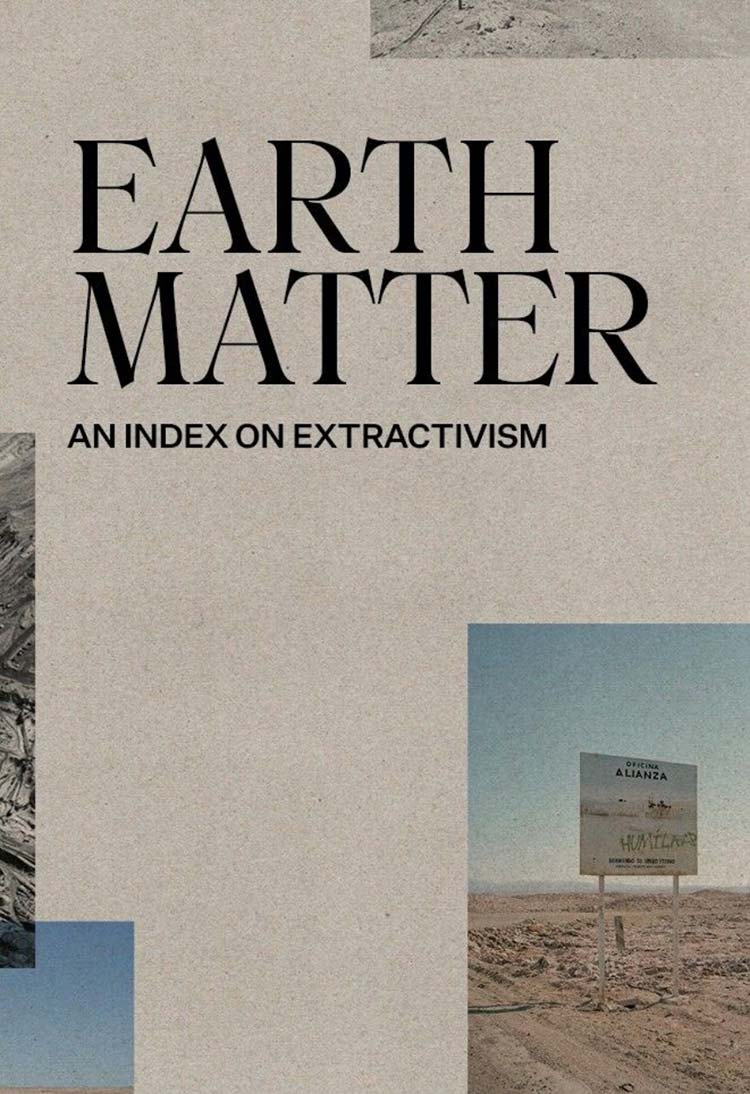
Earth Matter: An Index of Extractivism, Tenov Books, Barcelona

Earth Matter: An Index on Extractivism

Xavier Ribas, Louise Purbrick, and Ignacio Acosta
Edited by Carles Guerra and Joana Teixidor
With Essays by Robert Nichols, Cristina Dorador, and Sara Larraín
The culmination of over a decade of collaborative research exploring the global impact of extractivism, tied to the Traces of Nitrate project.
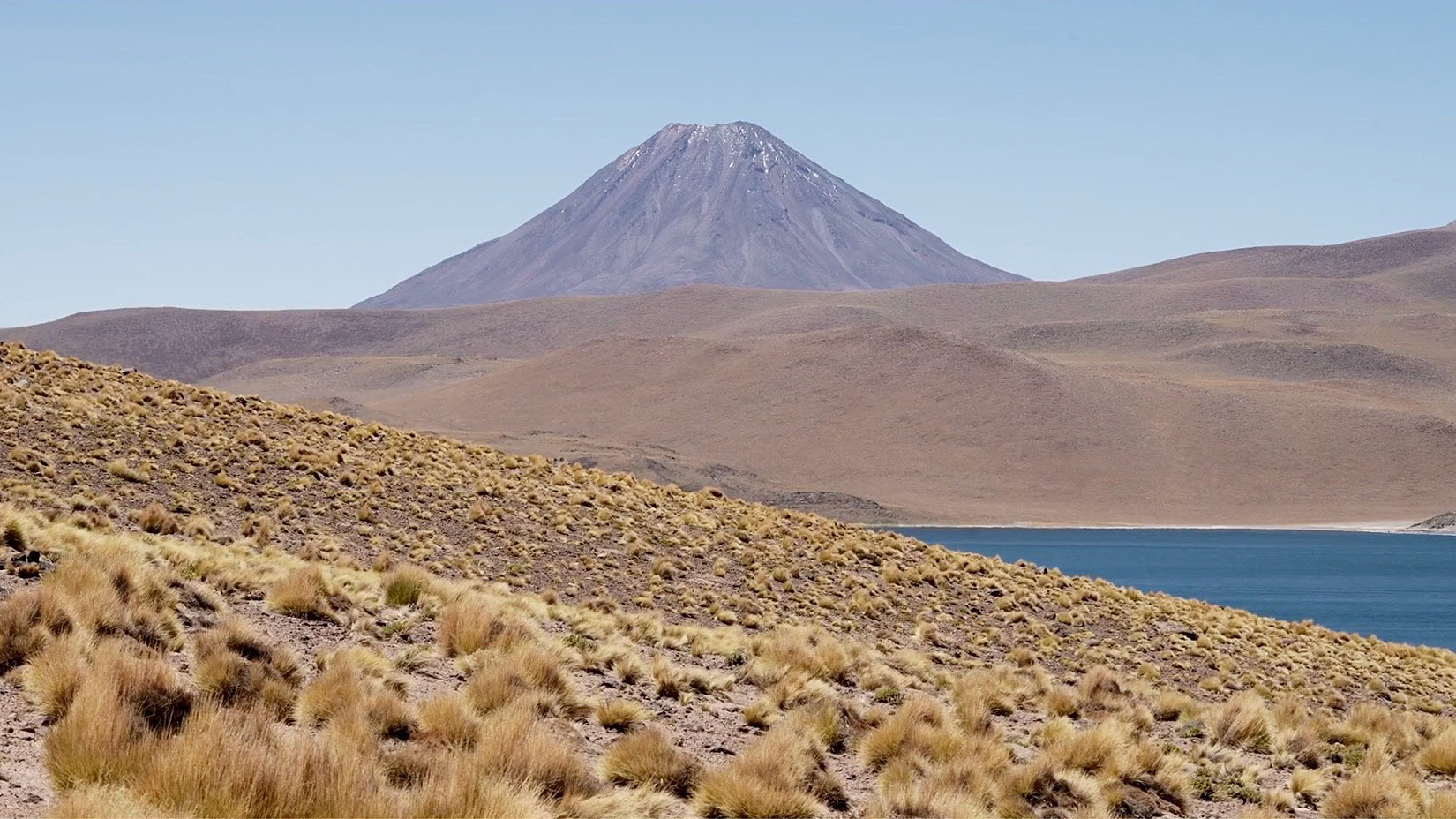
Earth Matter delves into the history of extractivism in Chile, beginning with the nitrate mines in the Atacama Desert in the nineteenth century and extending to the ongoing extraction of copper, lithium, and water. Through photography, video, archival research, and personal interviews, artist-researchers Xavier Ribas, Ignacio Acosta, and activist-writer Louise Purbrick examine the interconnected forces that bind Chile’s natural resources to global capital, particularly in the financial district of London.
This publication offers a critical analysis of how extractivist practices have shaped both historical and contemporary life, while anticipating future forms of exploitation. An index of terms explores past and present facts, documents, sites, projects, politicians, activists, NGOs, and critical writings, forming a Benjaminian constellation that readers can connect and decipher at their own pace.
The book includes essays by scientist Cristina Dorador on life in extreme climates, politician and environmentalist Sara Larraín on the legal protection of glaciers, political theory professor Robert Nichols on the history of land expropriation related to extractivism, and art curator Carles Guerra. Earth Matter provides a comprehensive map of the forces driving the increasingly hegemonic system of resource extraction. It reflects not only on past struggles but also on the ongoing fight for justice in the face of an unrelenting global economy.
Traces of Nitrate is an arts research collective led by Ignacio Acosta, Louise Purbrick, and Xavier Ribas, committed to documenting the extraction of minerals from Chile and their transformation in global capitalist systems. Through writing, photography, video, and sound, they seek to reveal the ecological and colonial legacies of mining and advocate for environmental justice.
—
External Link

Xavier Ribas, Louise Purbrick, and Ignacio Acosta Edited by Carles Guerra and Joana Teixidor With Essays by Robert Nichols, Cristina Dorador, and Sara Larraín The culmination of over a decade of collaborative research exploring the global impact of extractivism, tied to the Traces of Nitrate project. Earth Matter delves into the history of extractivism in […]

Archaeology of Sacrifice, ZF Friedrichshafen AG & modo Verlag, Friedrichshafen, Germany
Archaeology of Sacrifice, modo Verlag and ZF Art Foundation Friedrichshafen

Publication that stems from scolarshiop from ZF Friedrichshafen AG.
Through the discovery of a Celtic sacrificial site at Mormont Hill – a limestone and marl quarry located in the Swiss canton of Vaud – the two-channel video installation with surround sound design Archaeology of Sacrifice unveils how the notion of sacrifice has transitioned from ancient sacred rituals to its contemporary meaning within extractive capitalism.
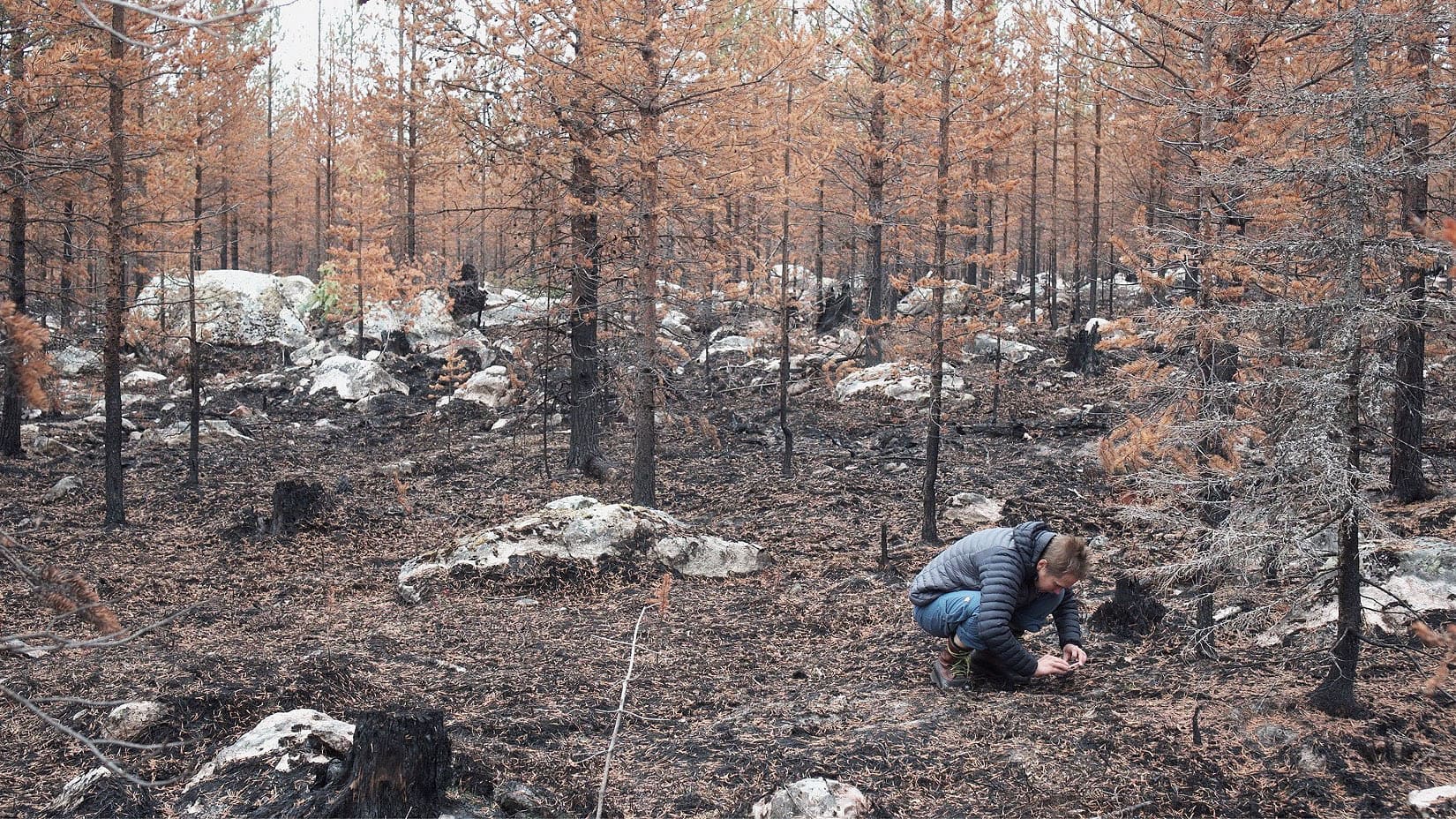
In 2006, the quarry was ordered to undertake an archaeological survey. In doing so, previous Celtic occupation was discovered. Evidence suggests the Celts living there during the second century BCE were experiencing a moment of crisis, perhaps linked to a Germanic invasion. Thus, they buried offerings in the form of several human and animal bodies, tools, and bronze vessels in exchange for guidance through the catastrophe.
Today, sacrifice is mediated by market exchange – the well-being of humans, non-humans, and the environment have been betrayed in favour of economic growth. Sacrifice zones are proliferating in areas deemed most extractable, most exploitable – usually regions under pressure from neoliberal policies. Here, humanity and nature are believed to be expendable and replaceable.
–
External Link

Publication that stems from scolarshiop from ZF Friedrichshafen AG. Through the discovery of a Celtic sacrificial site at Mormont Hill – a limestone and marl quarry located in the Swiss canton of Vaud – the two-channel video installation with surround sound design Archaeology of Sacrifice unveils how the notion of sacrifice has transitioned from ancient sacred rituals to its […]

Copper Geographies, Editorial RM, Barcelona/Mexico
Copper Geographies, Barcelona/Mexico: Editorial RM

The publication Copper Geographies by Editorial RM (2018) invites the viewer on the journey of copper from raw material through stock market exchange value, smelted commodity, capital wealth and recycled material. From the transformed landscapes of the Atacama Desert through a re-imagined voyage to Wales and the City of London, the book documents spaces of circulation, environmental disruption, protest and trade, and makes visible the return of the copper hidden within technological devices to its geographical origins.
The publication presents documentary research in the form of maps, photographs and texts, and offers a critical spatial imaginary for re-thinking the geographies of copper. It includes six written contributions by curators, historians and poets: Andrés Anwandter, Marta Dahó, Tehmina Goskar, Tony Lopez, Louise Purbrick and Frank Vicencio López.
Copper Geographies stems from the practice-based PhD thesis The Copper Geographies of Chile and Britain: A photographic study of mining, carried out between 2012-2016 as part of Traces of Nitrate, a research project developed in collaboration with Art and Design historian Louise Purbrick and photographer Xavier Ribas, based at the University of Brighton and funded by the Arts and Humanities Research Council (AHRC).
–
External Link

The publication Copper Geographies by Editorial RM (2018) invites the viewer on the journey of copper from raw material through stock market exchange value, smelted commodity, capital wealth and recycled material. From the transformed landscapes of the Atacama Desert through a re-imagined voyage to Wales and the City of London, the book documents spaces of […]